
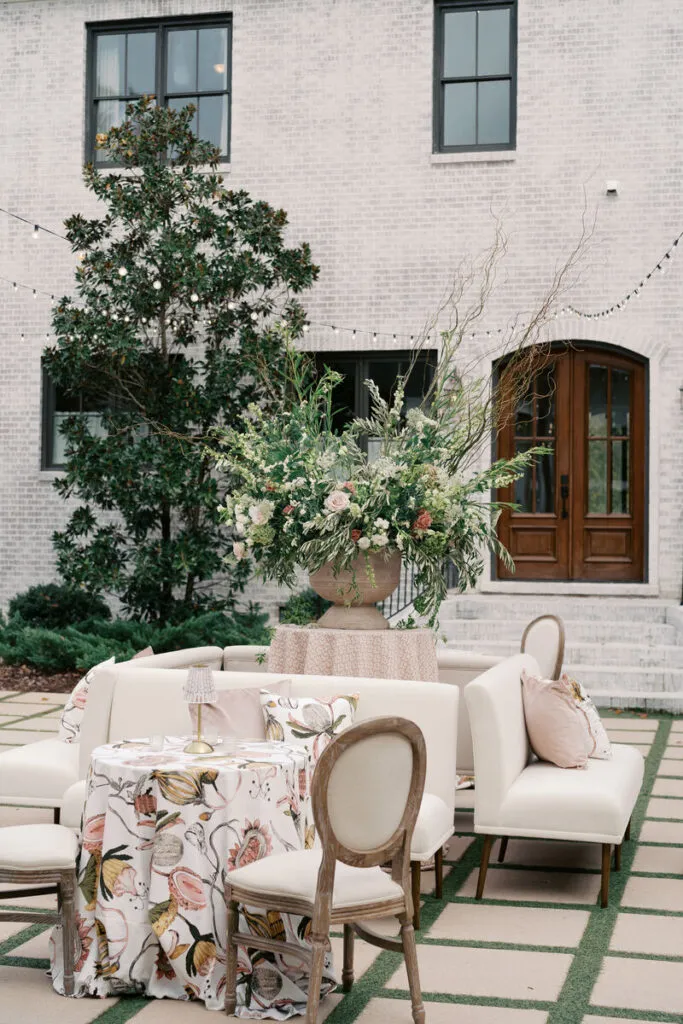
Dining tables and lounge areas often share the same event space, but they do not need identical textile treatments to feel connected. In fact, matching every fabric too closely can make the design feel overly coordinated rather than thoughtfully layered.
A stronger approach is to identify a few visual details that can move naturally from the dining area into the lounge. That might be a recurring color, a related pattern, or a shared sense of texture. Pillows can be especially useful because they introduce those connections on a smaller scale without requiring the lounge to mirror the tablescape.
For event planners, thoughtful event linen design means creating enough continuity that guests recognize the relationship between spaces while allowing each area to serve its own purpose.
Decide What Should Connect the Dining and Lounge Areas
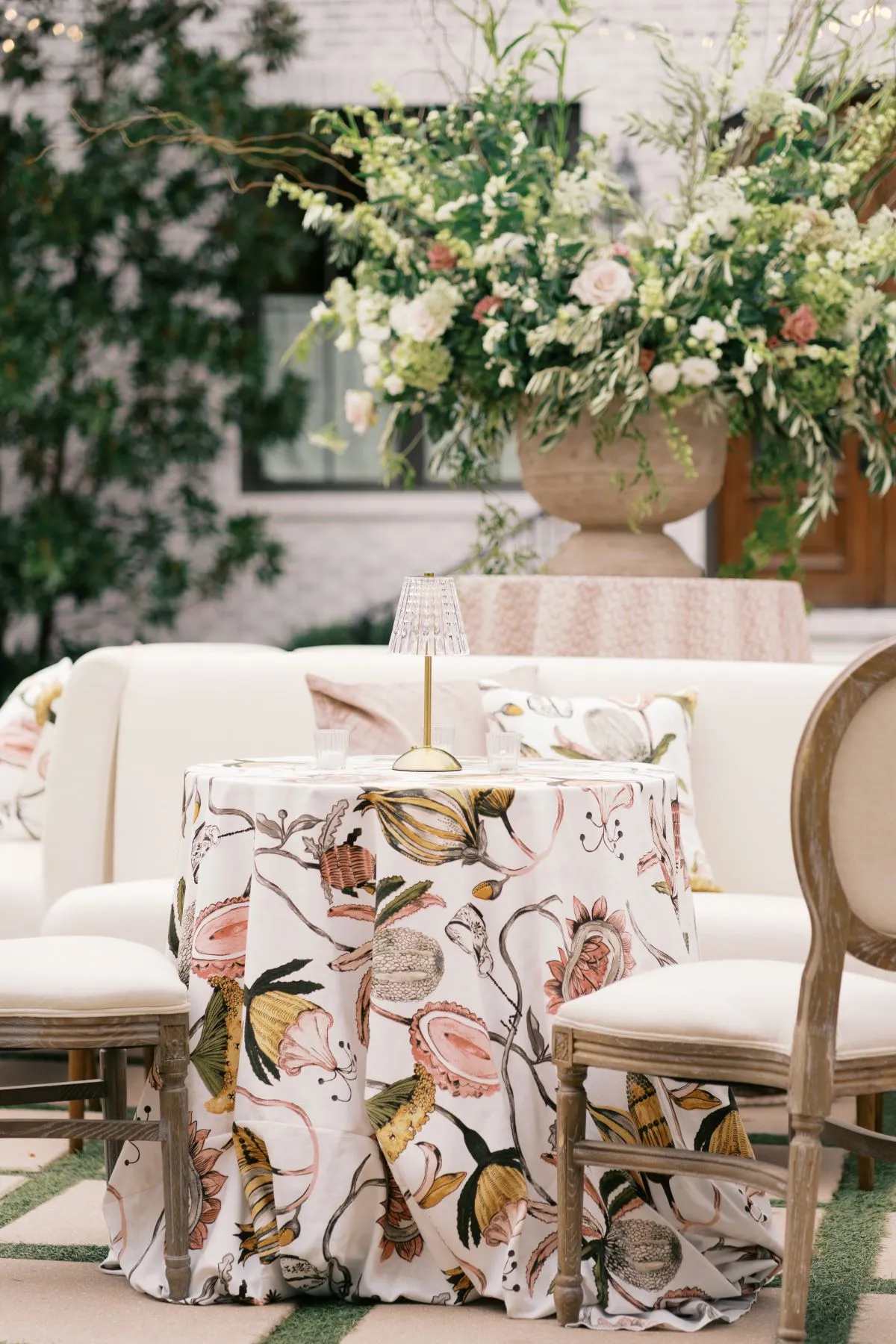
Before choosing pillows or other lounge textiles, determine which parts of the dining design are worth carrying into the lounge.
Trying to repeat every table color, pattern, and texture usually creates more visual noise than cohesion. One or two clear connections are often enough.
Choose One or Two Details to Carry Through
Start with the strongest elements of the dining design.
If the table linen uses a distinctive color, that tone may become the basis for the pillow palette. If the linen is patterned, a secondary color within the print might carry into the lounge instead. Texture can also provide the connection when the color palette is already well established.
The goal is to identify the design detail that will be easiest to recognize across both spaces.
Prioritize the Most Visible Linen Details
Not every linen detail needs to appear again.
A color covering dozens of dining tables will naturally have more visual presence than a small trim or subtle accent. Use those larger, more recognizable elements as the starting point for lounge coordination.
This creates a clearer relationship when guests view both spaces from across the room. For the standing-reception surfaces beside the lounge, see cocktail reception linens for high-boy tables.
Avoid Recreating the Dining Tablescape in the Lounge
The lounge should not feel like the dining table translated directly onto sofas and chairs.
If the dining tables use a strong patterned linen, that exact pattern does not necessarily need to appear on every pillow. A coordinating solid or related pattern can often create a more refined transition.
The objective is connection, not duplication.
Work With the Lounge Furniture Already Selected
Lounge textiles cannot be planned independently from the furniture beneath them.
The color, scale, material, and visual weight of sofas and chairs all affect how pillows will read once placed in the space. Review those pieces before deciding which dining-table details should carry into the lounge.
Account for Upholstery Color
Treat the upholstery as part of the event palette.
A deep-colored sofa may already contribute substantial visual weight, while ivory or neutral furniture may provide more flexibility for stronger pillow colors.
If the furniture and dining linens are both visually prominent, the pillows may work best as a bridge between the two rather than adding a third competing direction.
Use Contrast Where the Furniture Needs Definition
Pillows should remain visible against the upholstery.
A pillow that closely matches the sofa can disappear unless texture or pattern creates enough separation. A contrasting tone can help the textile feel intentional while still relating to the dining palette.
Contrast does not need to be dramatic. A lighter or deeper version of the same color family may be enough.
Let Neutral Furniture Carry Stronger Textile Accents
Neutral lounge furniture can provide an ideal foundation for more expressive pillows.
When sofas and chairs are cream, taupe, gray, or another quiet tone, planners may have more freedom to carry a patterned or saturated accent from the dining linens into the lounge.
This allows the textile connection to become more visible without overwhelming the space.
Use Color to Create a Clear Visual Connection
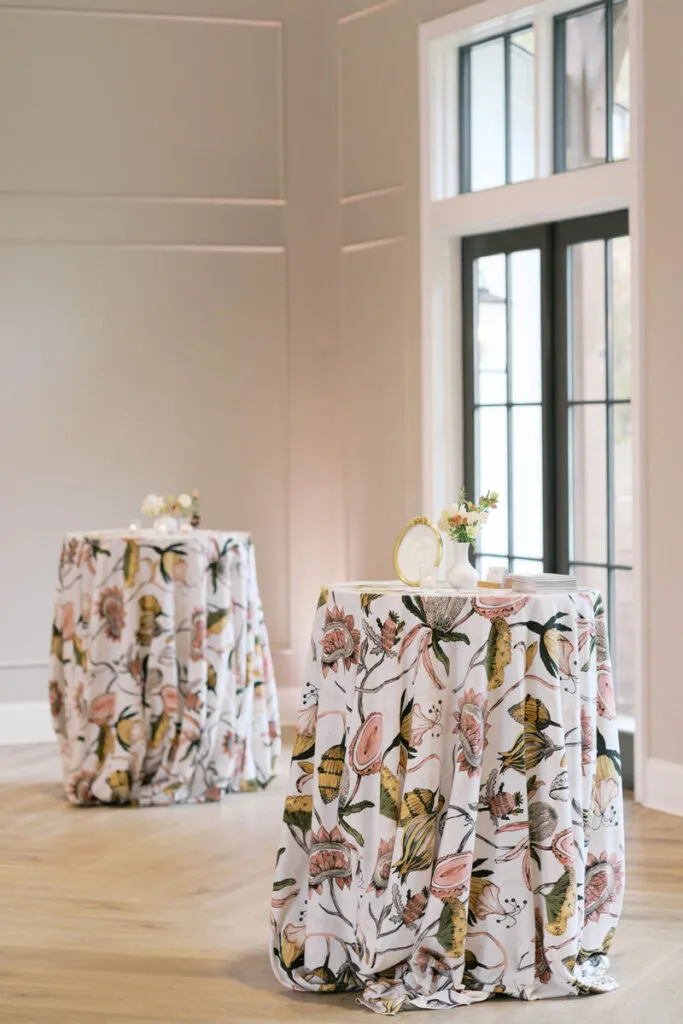
Color is often the easiest way to tie lounge areas back to the dining tables.
The relationship does not have to depend on exact matches. Related tones can create enough continuity while keeping the lounge from looking too literal.
Repeat a Secondary Linen Color in the Lounge
The most dominant table-linen color is not always the best one to repeat. For more detail, see our article Best Event Linen Rentals for Outdoor Summer Weddings and Corporate Events.
If the dining linen contains several tones, consider pulling a secondary or accent color into the pillows. That detail will still connect to the table design, but the lounge will develop its own visual identity.
This approach is particularly effective with patterned linens.
Use Related Tones Instead of Exact Matches
A lounge pillow can use a lighter, deeper, or more muted version of a color from the table linen.
For example, a soft green within the dining palette might shift toward olive or forest in the lounge. A pale blue could become navy, while a warm neutral could deepen toward taupe or chocolate.
These tonal relationships create cohesion without making the design feel overly matched. Carry a shared color or textile cue into the next area with linen continuity across event spaces.
Keep the Lounge Palette Focused
Introducing too many new colors can make the lounge feel disconnected from the rest of the event.
Choose a small palette and repeat it with intention. Two or three related tones are usually easier to manage than a large mix of colors with no clear hierarchy. We cover this further in Linen Zoning for Large Galas: A Planner’s Guide.
A focused palette also gives pattern and texture more room to contribute.
Coordinate Patterns Without Creating Competition
Pattern can provide a strong connection between dining and lounge areas, but it needs to be controlled.
When several patterns are visible in the same sightline, their scale, color, and intensity should be considered together.
Pair Patterned Table Linens With Quieter Pillows
If the dining tables already use an expressive patterned linen, lounge pillows do not need to repeat that same visual intensity.
Solid pillows in colors pulled from the tablecloth can create an effective connection. A quieter pattern may also work when it shares the same palette but introduces less movement.
This keeps the lounge related to the dining area without creating competition.
Add Pattern to the Lounge When Dining Linens Are Simple
Solid dining linens leave more visual room for pattern elsewhere.
In that case, lounge pillows can introduce an abstract, botanical, geometric, or other coordinated print while still using colors established at the table.
The result creates variation between the two areas while keeping the event design connected.
Use Related Pattern Families Rather Than Identical Prints
Patterns do not need to match exactly to feel intentional together.
They may share a similar scale, repeat one color, or have a comparable design character. A painterly table linen might coordinate with a quieter organic pillow pattern, while a geometric dining textile could connect with another structured motif. We cover this further in How to Coordinate Mixed Table Layouts for a Fall Gala.
The relationship should be visible without feeling copied.
Use Texture When Color Does Not Need Repeating
Sometimes color is already doing enough work across the room.
In those cases, texture can create a subtler connection between the dining and lounge areas without adding more shades to the palette.
Echo the Character of the Table Linen
Consider how the dining textile feels visually.
A rich or tactile linen may pair naturally with pillows that have similar depth, even if the colors differ. A smoother, more refined table linen may call for cleaner lounge textiles with restrained texture.
This creates continuity through material character rather than direct color repetition.
Balance Smooth and Textural Surfaces
A lounge filled with upholstered furniture naturally has a softer visual quality than a table covered with china, glassware, chargers, and flatware.
Pillows can help balance those differences. You may also find Corporate Summer Event Venue Linen Branding helpful.
A more tactile lounge textile can complement polished dining elements, while a cleaner pillow treatment may provide relief when the dining linen already contains significant texture. We cover this further in Corporate Event Linen Rentals for Dinners & Award Nights.
Avoid Too Many Competing Textures
Texture becomes less effective when every textile is trying to feel different.
If the sofa upholstery, pillows, dining linen, napkins, and other textile elements all introduce strong surfaces, the overall design can become visually dense.
Choose a few purposeful contrasts rather than maximizing texture everywhere.
Give Multiple Lounge Areas a Shared Design Language
Large events may contain several lounge groupings rather than one central seating area.
Those lounges do not need to use identical pillows, but they should share enough visual language that they still feel like part of the same event.
Establish a Core Pillow Palette
Start with a small set of colors or textile characteristics that can appear across all lounge areas.
One lounge might emphasize a deeper tone, while another uses more of a neutral from the same palette. A shared pattern color or texture can also create continuity.
This gives planners flexibility without losing cohesion.
Vary the Mix Without Changing the Concept
Different lounge areas can use different pillow combinations.
One grouping might feature more solids, while another includes a patterned accent. As long as they share the same underlying palette or design direction, the variations will still feel intentional.
This can help large spaces feel layered rather than repetitive.
Keep Nearby Lounge Areas More Closely Related
Lounges visible within the same sightline generally benefit from stronger consistency.
If two seating areas sit directly across from one another, their pillow palettes should feel closely connected. Lounges positioned in separate rooms or distant areas can usually support more variation.
Consider what guests will see at the same time.
Consider How Dining and Lounge Areas Are Seen Together
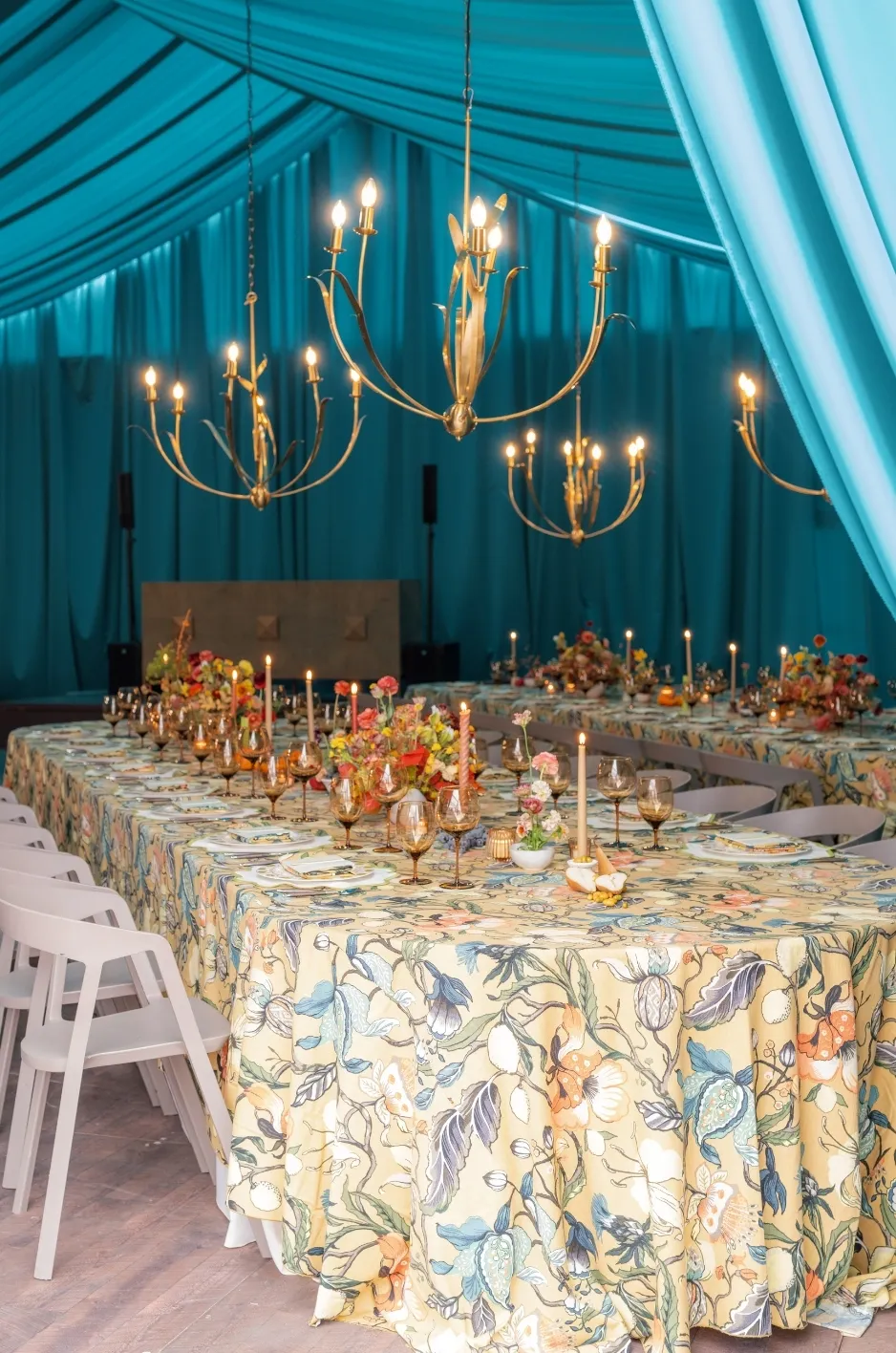
It is easy to evaluate a lounge successfully when standing inside it. The more important question is how it looks in relation to the dining area.
Shared sightlines reveal whether the two spaces feel genuinely connected.
Check Shared Sightlines
Stand at the entrance, near the bar, beside the dining area, and anywhere else guests are likely to see several spaces together.
Look at which colors or patterns are most prominent and whether the lounge feels like a natural extension of the same event.
If the connection is difficult to see, one repeated textile detail may be enough to strengthen it.
Watch for Competing Patterns
A strong dining linen and strong lounge pillows may each look successful independently but compete when seen together.
If both areas contain significant pattern, decide which should carry more visual weight. The other can be simplified through quieter colors or smaller-scale motifs.
The room should have clear emphasis rather than several competing focal points.
Adjust the Visual Weight Between Areas
Dining tables and lounges do not need equal visual intensity.
If the dining design is the primary focus, lounge textiles can remain supportive. If the tables are intentionally restrained, the lounge may provide a stronger color or pattern moment.
This variation can make the room more interesting while maintaining cohesion.
Use Pillows as Accents, Not Exact Linen Matches
Pillows are particularly effective because they allow planners to repeat textile ideas on a smaller scale.
They can reference the dining design without requiring the lounge to reproduce it.
Pull a Color From a Patterned Table Linen
If the dining linen contains several colors, select one to carry into the lounge.
A solid pillow in that shade can provide a clear connection without repeating the table pattern itself. This is one of the simplest ways to coordinate a visually active dining area with a more relaxed lounge.
Introduce Pattern When the Table Linens Are Solid
When the dining tables use solid linens, pillows can provide a controlled place to introduce pattern.
The print can draw from the main palette while giving the lounge more movement and personality.
This creates variation between the spaces without breaking the overall design.
Mix Solids and Patterns With a Clear Purpose
A combination of patterned and solid pillows can create depth, but each piece should contribute to the same visual direction.
Use repeated colors to hold the mix together and avoid introducing unrelated patterns simply for variety.
Curated Linen Collection’s pillow options can be coordinated with table linens and other textile elements to help planners carry a consistent palette or design idea into lounge areas without requiring exact matches.
Know When the Spaces Feel Connected Enough
Cohesion does not come from repeating the same detail everywhere.
Once guests can clearly recognize the relationship between dining and lounge areas, further repetition may begin to feel unnecessary.
Remove Repeated Details That Feel Too Literal
If the same color, pattern, and texture already appear throughout the room, the lounge may not need another identical reference.
Remove anything that feels repetitive rather than purposeful.
Often, one shared color or textile characteristic is enough to create the connection.
Let Each Area Maintain Its Own Function
Dining tables tend to feel more structured, while lounge areas can be softer and more relaxed.
That difference is useful.
The textiles should support each area’s function while still belonging to the same design language. Trying to make both spaces feel identical can flatten the event rather than unify it.
Review the Event as One Environment
Before finalizing selections, step back from the individual tables and lounge groupings.
Consider the event as one complete environment. Look for repeated colors, balanced patterns, and enough variation to distinguish different areas.
The goal is not perfect matching. It is a room where every textile decision feels related and intentional.
Frequently Asked Questions
Do Lounge Pillows Need to Match the Table Linens?
No. Pillows can repeat a color, texture, or pattern detail from the table linens without using the exact same textile.
Can Patterned Pillows Work With Patterned Table Linens?
Yes. Keep one pattern more restrained and use shared colors to help the two feel connected.
How Many Pillow Colors Should Be Used?
Keep the palette focused. Two or three related colors are usually enough to create variation without making the lounge feel disconnected.
Should Every Lounge Area Use the Same Pillows?
No. Different lounge areas can use different combinations as long as they share a consistent palette or design direction.
What Should Be Considered Before Choosing Lounge Pillows?
Review the table linens, furniture upholstery, event palette, and nearby patterns first. The pillows should support those existing elements rather than introduce an unrelated design.
Connect the Event Without Making Every Textile Match
Dining tables and lounge areas should feel connected, but they do not need to look identical. Selective repetition creates a more natural relationship than copying the same fabric or pattern throughout the room.
By carrying one or two colors, related patterns, or shared textures from the dining design into lounge pillows, planners can create continuity while allowing each space to maintain its own character.
Curated Linen Collection offers table linens, napkins, runners, specialty overlays, and coordinating pillows that can help planners extend a textile direction across different areas of an event while keeping the overall design polished and cohesive. For help choosing linens for your event, request a quote.