
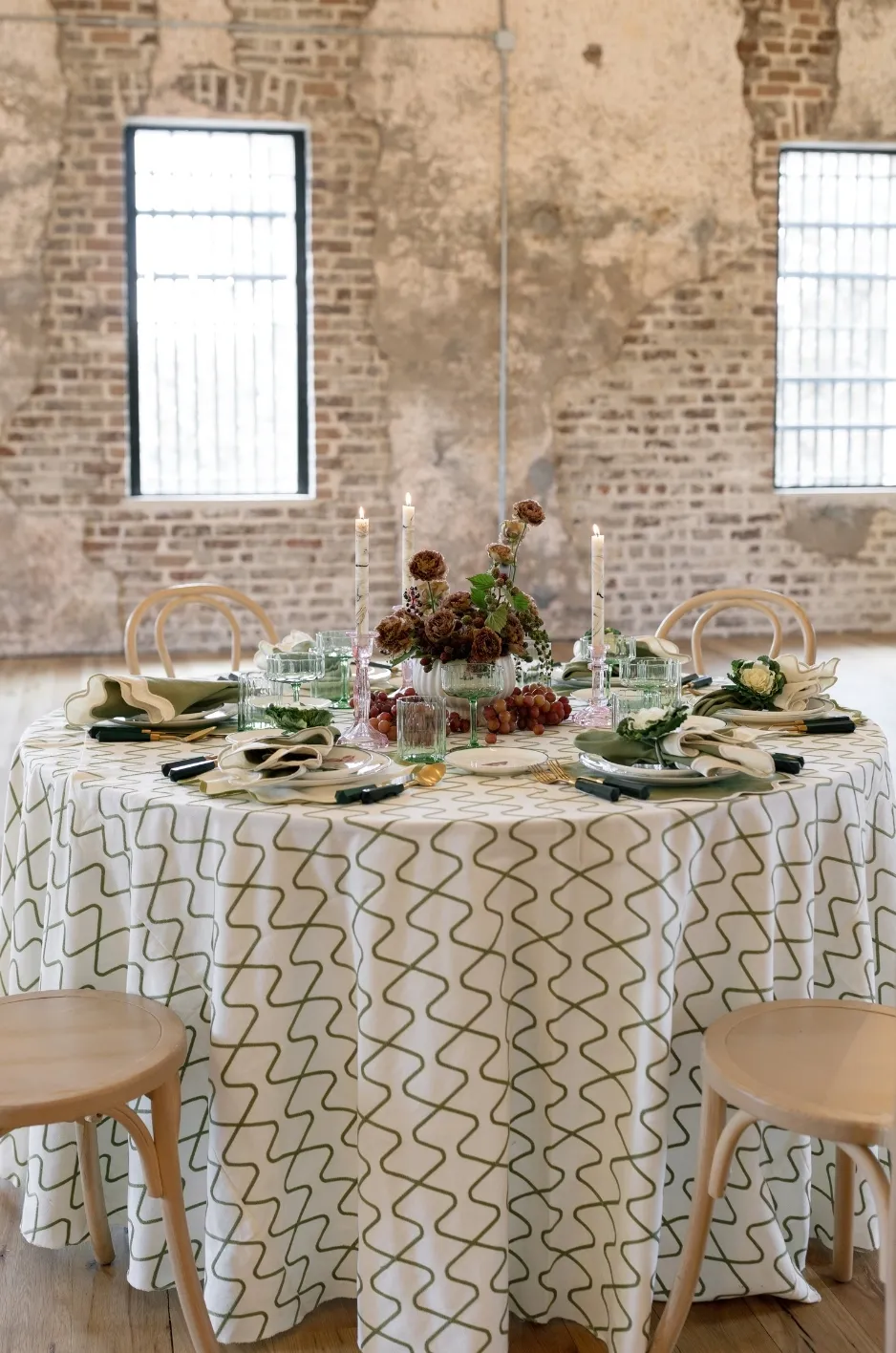
Formal galas call for a level of visual refinement that extends beyond choosing beautiful individual pieces. When a room includes dozens of dining tables, prominent host or honoree tables, cocktail areas, and specialty surfaces, every linen does not need to compete for attention. The stronger approach is to establish a clear hierarchy.
Statement linens create the moments that draw the eye. Supporting linens give those moments space to stand out while carrying the same design language throughout the event. Used together, they can make a formal gala feel layered and intentional without making every table equally decorative.
The distinction is not as simple as patterned versus solid or bold versus neutral. A richly textured solid may become the strongest textile in the room, while a restrained pattern can quietly support the broader palette. What matters is the role each linen plays within the complete gala design.
Understand the Role of Statement and Supporting Linens
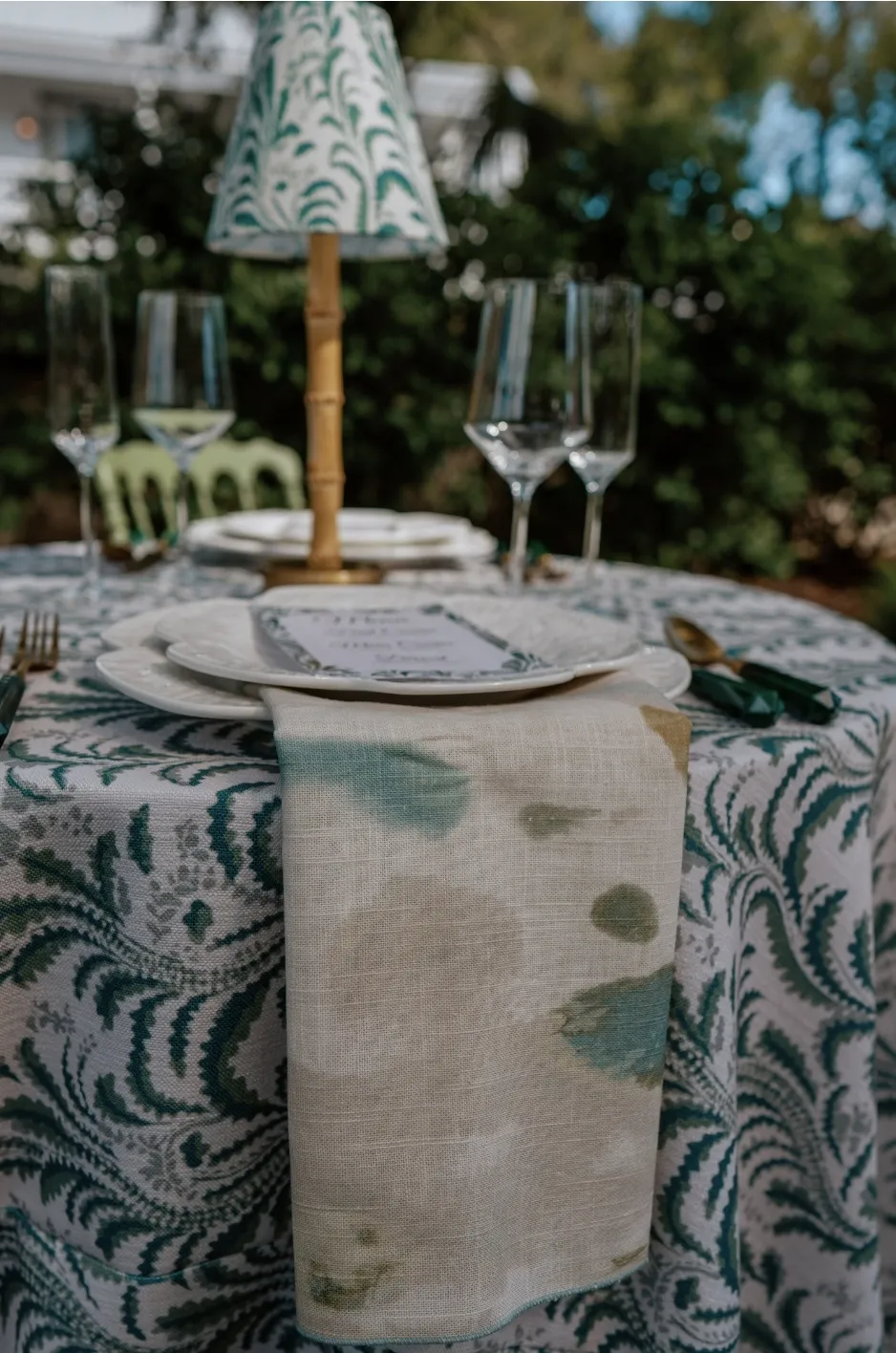
Statement and supporting linens serve different visual purposes, but they work best when planned together. A statement treatment establishes emphasis, while supporting textiles create continuity around it. Neither category should be treated as secondary to the quality of the overall design.
For formal galas, this distinction is especially useful because the room often contains several types of tables and different levels of importance. Creating a textile hierarchy helps each area feel appropriately considered without introducing unnecessary variation.
What Makes a Linen a Statement Piece?
A statement linen is the textile intended to attract attention or define a particular area of the event.
Its impact may come from:
A distinctive print
Rich or dimensional texture
Strong color contrast
An expressive finish
An unexpected color within the broader palette
A combination of pattern and texture
The linen does not have to be bright, heavily patterned, or ornate. A deep velvet in an otherwise restrained room, for example, may have more visual authority than a multicolored print.
The key question is whether the linen is meant to lead the textile design. If other selections are being coordinated around it, it is functioning as a statement piece.
What Makes a Linen a Supporting Piece?
Supporting linens reinforce the design without competing with its strongest textile moments.
They may use a solid color pulled from the statement linen, a restrained tonal pattern, or a quieter texture that adds depth without becoming the first detail guests notice.
Supporting does not mean plain. A linen can still have richness, sheen, texture, or color while occupying a quieter role within the overall composition.
This is particularly important for a formal gala, where too many visually dominant surfaces can make a carefully planned room feel crowded rather than elevated.
Why Formal Galas Benefit From Both
Using only statement treatments can leave the room without enough visual rest. Conversely, making every linen equally restrained can reduce the sense of hierarchy that gives a formal event its presence.
Statement and supporting linens create contrast between important moments and quieter areas. That contrast helps guests understand the room visually, even if they never consciously identify why one table or section feels more prominent than another.
The result should feel composed rather than uniform.
Decide Where the Statement Linen Should Lead
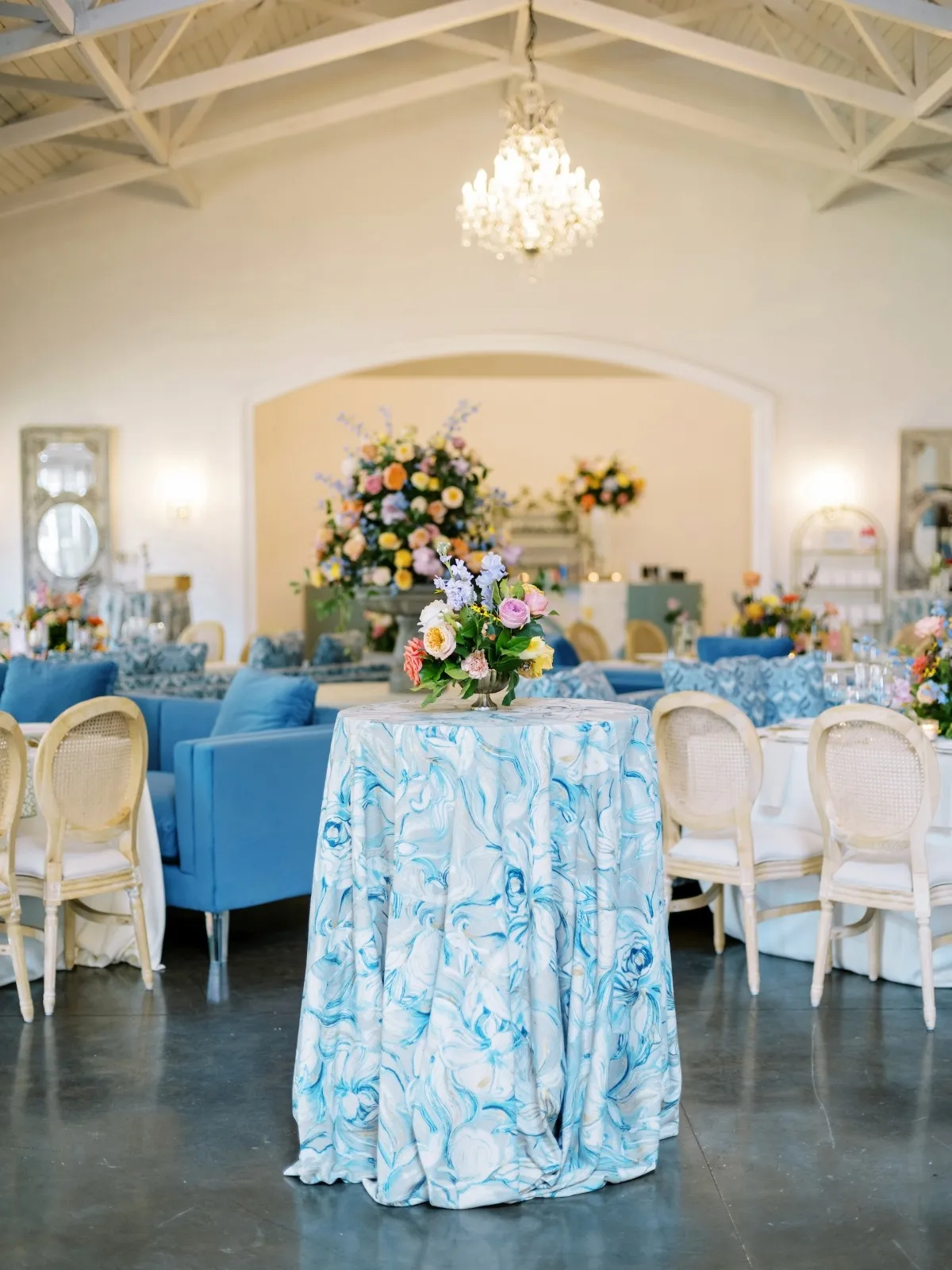
A statement linen becomes more effective when there is a clear reason for its placement. Instead of choosing the most distinctive textile and automatically applying it across every table, planners can first determine which areas should carry the strongest visual emphasis.
For a formal gala, this decision should be made in relation to the complete room. The primary dining area may need to establish the event’s main identity, while an honoree table or another focal surface may call for a more distinctive treatment.
Use Statement Linens on Key Guest Tables
Statement linens can be used across the main guest tables when the textile itself is intended to establish the gala’s dominant visual direction.
This works particularly well when the room benefits from a strong repeated element. A sophisticated pattern, rich texture, or carefully selected color can create continuity across a large dining area and make the tables feel deliberately connected.
However, repetition increases visual strength. A linen that appears refined on one table may become much more dominant when repeated across twenty or thirty tables.
Before extending a statement treatment throughout the guest seating, consider whether the surrounding design can support that level of repetition. When florals, lighting, stationery, and tabletop pieces already carry considerable detail, a quieter linen may give the room better balance.
Give Focal Tables Their Own Linen Identity
A host, honoree, family, or other important table may warrant a different level of emphasis from the primary guest seating.
The distinction does not require an entirely unrelated linen. A focal table can remain within the same design language while introducing more pattern, richer texture, or stronger contrast.
For example, restrained guest tables could surround one expressive patterned table, or patterned guest tables could be paired with a richly textured solid at the focal table. In both cases, the difference establishes importance without breaking the visual connection between the tables.
The strongest choice depends on what else is happening on that surface. If the focal table already includes elaborate florals, layered place settings, or another prominent design feature, the linen may be more effective when it supports rather than competes. For an installation where the tablecloth itself helps define a formal room, see high-end gala tablecloth rentals and custom drapes.
Consider the Strength of the Surrounding Design
Statement linens do not exist independently from the rest of the room.
A dramatic ballroom, strong architectural detailing, sculptural florals, extensive candlelight, or prominent lighting installations can already provide considerable visual impact. In those settings, the linen may not need to carry as much contrast or pattern.
A cleaner or more restrained environment may allow the textile design to take a stronger role.
The objective is not to match the linen to every surrounding feature. It is to determine how much visual weight the table needs within the complete event.
Use Supporting Linens to Build Cohesion Across the Gala
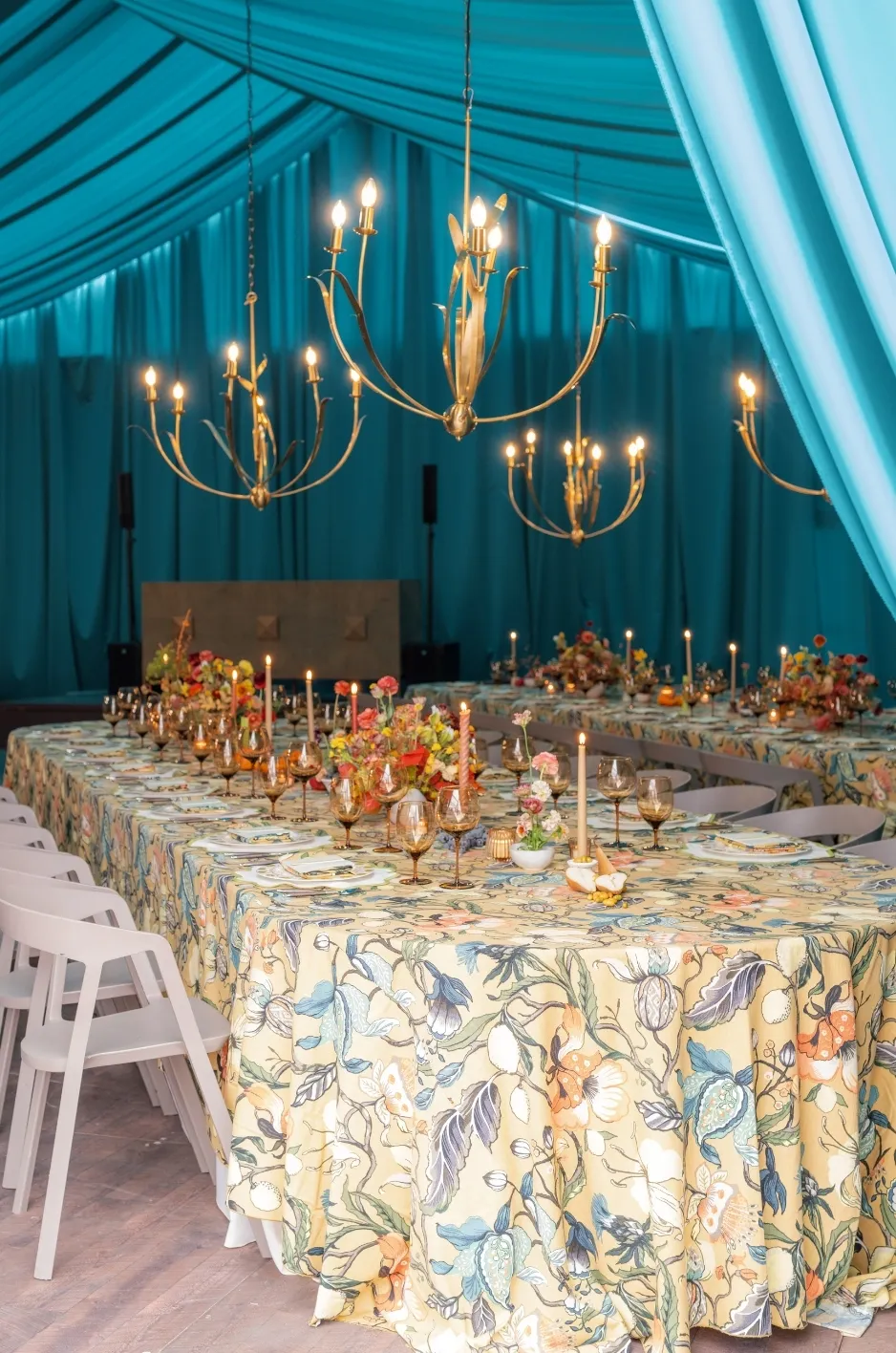
Supporting linens create the visual bridge between statement moments. They allow different table groups to feel related without requiring the same textile to appear everywhere.
For formal galas, this can be particularly valuable when the floor plan includes several areas with different functions. Guest tables, cocktail areas, focal tables, and specialty surfaces can share a clear textile direction while still carrying different levels of emphasis.
Pull Supporting Colors From the Statement Linen
When a statement linen contains several colors, one or two can become the basis for the supporting selections.
A quieter background shade may translate well to surrounding tablecloths, while a deeper or more distinctive color can be repeated through napkins or smaller textile details.
The supporting color does not need to be the most obvious shade in the pattern. Choosing a secondary tone can create a more subtle connection and keep the overall room from looking overly matched.
This approach is especially useful when the statement linen contains enough visual movement that repeating the full pattern throughout the space would be unnecessary.
Use Texture Without Creating Competition
Supporting linens can still contribute depth.
A solid fabric with subtle texture may provide more dimension than a perfectly flat surface while remaining quieter than the primary statement treatment. This allows the room to maintain a sense of richness without introducing another dominant pattern.
Texture can also differentiate one table group from another when the palette remains closely controlled. A smooth linen and a more dimensional textile in related shades can create distinction without requiring a dramatic color change.
The important consideration is hierarchy. If the supporting fabric becomes as visually assertive as the statement linen, the distinction between their roles begins to disappear.
Carry Small Linen Details Across Different Tables
Smaller textile elements can create continuity between different table treatments.
A napkin color used at both statement and supporting tables can provide a clear visual connection. A restrained runner or another repeated detail can serve the same purpose where appropriate.
This type of repetition is particularly useful in large gala spaces because the tables do not need to look identical in order to feel coordinated. A consistent secondary element can establish the relationship without requiring every tablecloth to match.
Create Hierarchy Across Formal Gala Tables
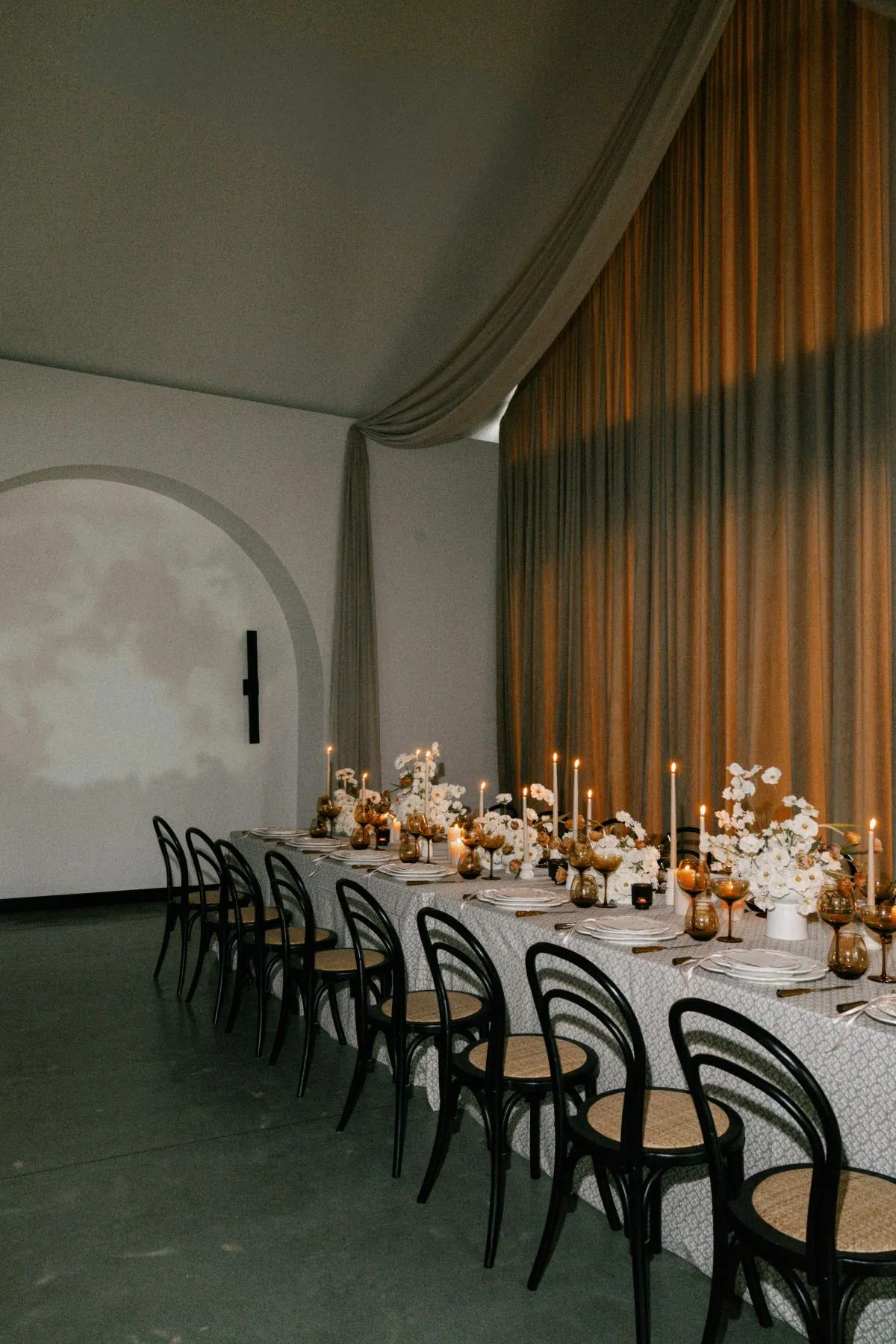
A formal gala may include several areas that deserve attention, but treating each one as an independent design moment can quickly create too many competing ideas.
A stronger linen plan establishes a primary treatment, determines where additional emphasis is necessary, and keeps every variation connected to the same visual direction.
Establish the Primary Dining Treatment
Begin with the largest group of tables in the room.
For many galas, the guest dining tables form the dominant visual field. Decide whether these tables will carry the statement linen or provide the supporting foundation for more expressive focal areas. For more detail, see our article Linen Zoning for Large Galas: A Planner’s Guide.
If the guest tables use the main pattern, other important tables do not necessarily need a second statement print. They may be distinguished through texture, a deeper coordinating color, or another controlled change. You may also find How to Use Linen Zoning for Large Guest Galas helpful.
If the guest tables remain more restrained, one or two focal linen treatments can carry greater visual weight.
Starting with the primary dining treatment makes the rest of the hierarchy easier to define.
Add One Clear Level of Emphasis
An important table does not need to look completely different from the rest of the gala. Read more in How to Plan Linens for a Fall Fundraising Gala.
Often, moving one step above the primary treatment creates enough distinction.
A solid guest table might lead to a patterned focal table. A restrained patterned guest table might lead to a richer texture in a related color. A quieter base linen might be elevated through a distinctive runner or overlay rather than replaced entirely.
This measured progression keeps the event sophisticated. The focal area feels intentional because it has greater emphasis, not because it introduces an unrelated design.
Keep Specialty Treatments Connected
Any linen treatment that differs from the main dining tables should still have a recognizable relationship to them. We cover this further in Best Event Linen Rentals for Outdoor Summer Weddings and Corporate Events.
That connection might come from:
A repeated color
A shared pattern family
A similar texture
A recurring accent linen
A consistent level of formality
This allows the event to accommodate variation while retaining one visual identity.
For formal galas, cohesion generally creates a stronger impression than constant novelty.
Balance Pattern, Texture, and Color
Statement and supporting linens should not be defined by a single design characteristic. Pattern, texture, and color can each create visual weight, and the strongest gala designs consider how these qualities interact.
This gives planners more flexibility than assuming that statement linens must be patterned while supporting pieces must always be plain.
Let Pattern Provide the Statement
An expressive pattern can establish the central textile direction for a gala.
When the pattern already contains movement and several colors, supporting selections can remain relatively restrained. Solids or low-contrast textiles allow the print to remain recognizable without surrounding it with competing information.
A pattern can also be used more selectively when its visual presence is strong. One defined table group may be enough to establish the idea throughout the room.
The goal is not to maximize the amount of pattern but to give it enough presence to feel deliberate. For a room-wide approach to repetition and motif scale, see using patterned linens across large fall events.
Use Texture as a More Subtle Statement
Pattern is not the only way to create emphasis.
A richly textured fabric can make a table feel distinctive while maintaining a controlled palette. This can be especially effective for formal galas where the design calls for depth and richness without introducing another print.
Texture also responds differently to lighting throughout an evening event. A fabric with dimension or a subtle finish may become more noticeable as the room shifts from daylight or ambient lighting into candlelight and evening illumination.
Used carefully, that change can create a statement that feels quieter and more refined than a high-contrast pattern. For more detail, see our article Cocktail Reception Linens for High-Boy Tables.
Use Color Contrast Carefully
Color can determine how strongly a linen reads from across the room.
A deep or saturated linen surrounded by pale tables will naturally attract attention, even if every fabric is solid. Similarly, two closely related shades can create a softer distinction despite differences in pattern or texture.
Formal gala design often benefits from controlled contrast. The statement linen should be recognizable, but it does not need to feel disconnected from everything around it.
Using colors from the same broader palette allows one textile to lead without breaking the cohesion of the event.
Know When a Statement Linen Should Be Repeated
A statement linen can appear once, across a selected group of tables, or throughout the main dining area. There is no fixed amount of repetition that works for every gala.
The decision should depend on the strength of the textile, the number and arrangement of tables, and how much other visual detail is already present.
Repeat the Statement Linen to Create Continuity
Repeating a statement linen can create a strong sense of unity when the event needs one clear textile identity.
This may work across all guest dining tables or within a defined section of the room. Repetition is particularly effective when the surrounding design is disciplined enough to let the linen remain the primary textile feature.
The more expressive the pattern or texture, the more important it becomes to review its cumulative effect. A strong textile repeated across a large room can shape the entire visual experience.
That may be exactly what the gala requires, but it should be a deliberate choice.
Use Supporting Tables to Create Visual Rest
Supporting tables can separate or frame stronger treatments.
Rather than alternating statement and supporting linens at random, think in groups. A central section may carry the primary linen while surrounding tables use a quieter treatment, or a focal table may stand within a larger field of coordinated solids.
Grouping creates clarity.
It also gives statement linens more impact because they are not competing with an equally strong treatment on every neighboring table.
Avoid Too Many Competing Statement Linens
A large gala offers many opportunities to introduce different fabrics, but variety does not automatically create sophistication.
Several unrelated patterns, multiple strong textures, and numerous contrasting colors can divide the room into separate visual ideas. Even individually beautiful linens may lose impact when everything is trying to become the focal point.
When more than one statement treatment is used, each should have a clear role and a relationship to the others.
A controlled combination of one dominant textile direction and supporting variations will usually produce a more coherent formal environment. If too many textiles are trying to lead at once, use how to fix an event linen plan that feels too busy to simplify the hierarchy.
Refine the Linen Mix as a Complete Gala Design
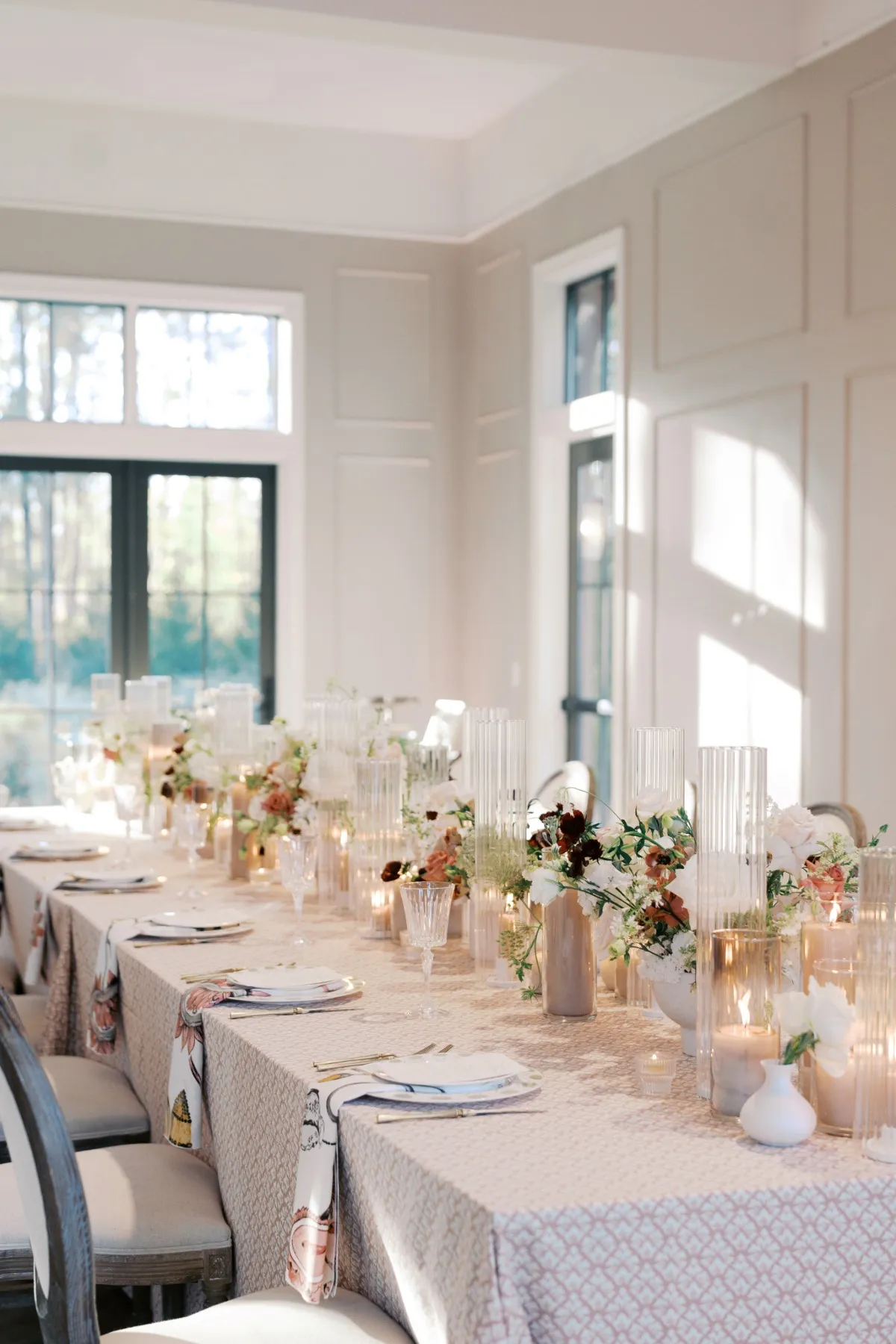
Statement and supporting linens should be reviewed together before the design is finalized. A textile that looks appropriate by itself may take on a different role once it sits beside the other treatments planned for the event.
The final review should answer a simple question: Is it clear where the linen design is meant to lead and where it is meant to support?
Compare the Treatments Side by Side
Review statement and supporting selections as a group rather than approving each one independently.
Look for relationships in color, texture, pattern, and overall formality. The pieces do not need to match, but they should feel as though they belong to the same event.
If one linen appears disconnected, determine whether the issue is color, visual weight, finish, or simply too much contrast.
The most effective correction may be to simplify rather than add another coordinating element.
Check Which Linen Draws Attention First
The intended statement treatment should still feel dominant once all selections are considered together.
If a supporting linen unexpectedly attracts more attention because of its sheen, color, pattern, or texture, the hierarchy may need to be adjusted.
This does not mean every supporting textile must become quieter. Sometimes the better solution is to strengthen the intended focal linen or reconsider where each treatment is placed.
What matters is that the final hierarchy feels purposeful.
Simplify When Too Many Elements Compete
Editing is part of luxury event design.
If several tablecloths, overlays, runners, napkins, and other textile details all carry strong pattern or contrast, removing one treatment can make the remaining selections more effective.
The same principle applies across the room. If every table category has its own statement linen, reducing the number of distinct treatments can create greater visual clarity.
A formal gala does not need more design everywhere. It needs the right amount of emphasis in the right places.
Frequently Asked Questions
Does Every Formal Gala Need a Statement Linen?
No. A formal gala can use a restrained linen palette throughout and still feel polished and elevated. A statement linen is most useful when the textile design needs a clear focal point or when selected tables should carry greater visual emphasis.
Can a Solid Linen Be a Statement Linen?
Yes. A strong color, rich texture, distinctive finish, or pronounced contrast can give a solid linen enough presence to become the statement treatment.
Do Supporting Linens Have to Be Neutral?
No. Supporting linens can use color, texture, or subtle pattern. They simply need to remain visually connected to the main design without competing with the intended statement piece.
Should All Guest Tables Use the Same Linen?
Not necessarily. One treatment can create strong continuity across all guest tables, but a controlled mix of statement and supporting linens can also work when the placement follows a clear design hierarchy.
Can Napkins or Runners Act as the Statement Linen?
Yes. A statement textile does not have to cover the entire table. A patterned napkin, distinctive runner, or other smaller linen element can provide the strongest textile detail when a full statement tablecloth would add more visual weight than the design needs.
Create a Balanced Linen Direction for a Formal Gala
The most refined gala linen designs are not built by making every table equally dramatic. They create a deliberate hierarchy, allowing certain textiles to establish emphasis while others provide continuity and visual balance.
A statement linen can introduce pattern, texture, color, or contrast where the event needs greater presence. Supporting linens can carry those ideas into surrounding tables without repeating the exact same treatment. Together, they allow a formal room to feel layered without becoming visually crowded.
For planners selecting linens for a gala, the goal should be to view every textile as part of one larger composition. When statement and supporting pieces have clearly defined roles, the room feels considered from the primary dining tables to its most prominent focal moments.
Curated Linen Collection provides the range and design flexibility needed to build that kind of cohesive textile direction, allowing formal gala tables to feel distinctive while remaining part of one refined event environment. For help choosing linens for your event, request a quote.