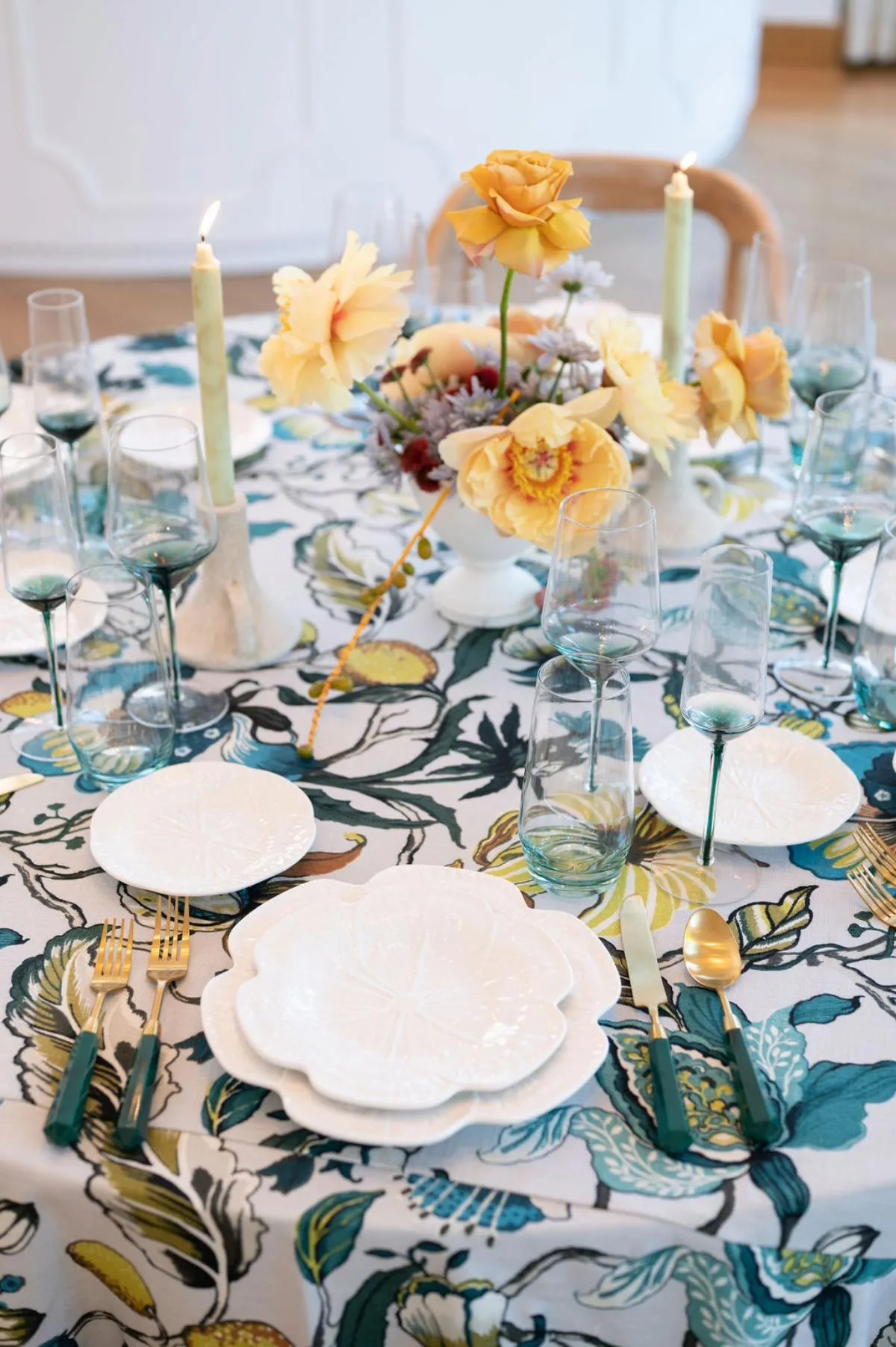
Linen overlays introduce depth and texture to summer tablescapes by layering natural fabric over a base linen or table surface. This simple design element helps structure the table visually while highlighting centerpieces, place settings, and decorative accents. Event planners often rely on linen overlays to create refined tables that feel intentional and balanced without adding visual heaviness to the overall design.
The natural weave of linen contributes subtle texture that interacts beautifully with glassware, ceramics, florals, and metallic accents. When placed strategically, an overlay draws the eye toward the center of the table and creates a clear focal point within the tablescape. This layered approach works especially well for summer events where light fabrics and breathable materials support both comfort and visual elegance.
In weddings, garden receptions, and outdoor dining events, linen overlays help define the table composition while complementing seasonal color palettes and natural surroundings. Thoughtful layering, coordinated textures, and balanced color choices allow these fabrics to elevate the entire dining environment. This guide explores how linen overlays enhance summer tablescapes through texture, layering techniques, and cohesive styling.
How Linen Overlays Create Depth and Texture in Summer Tablescapes
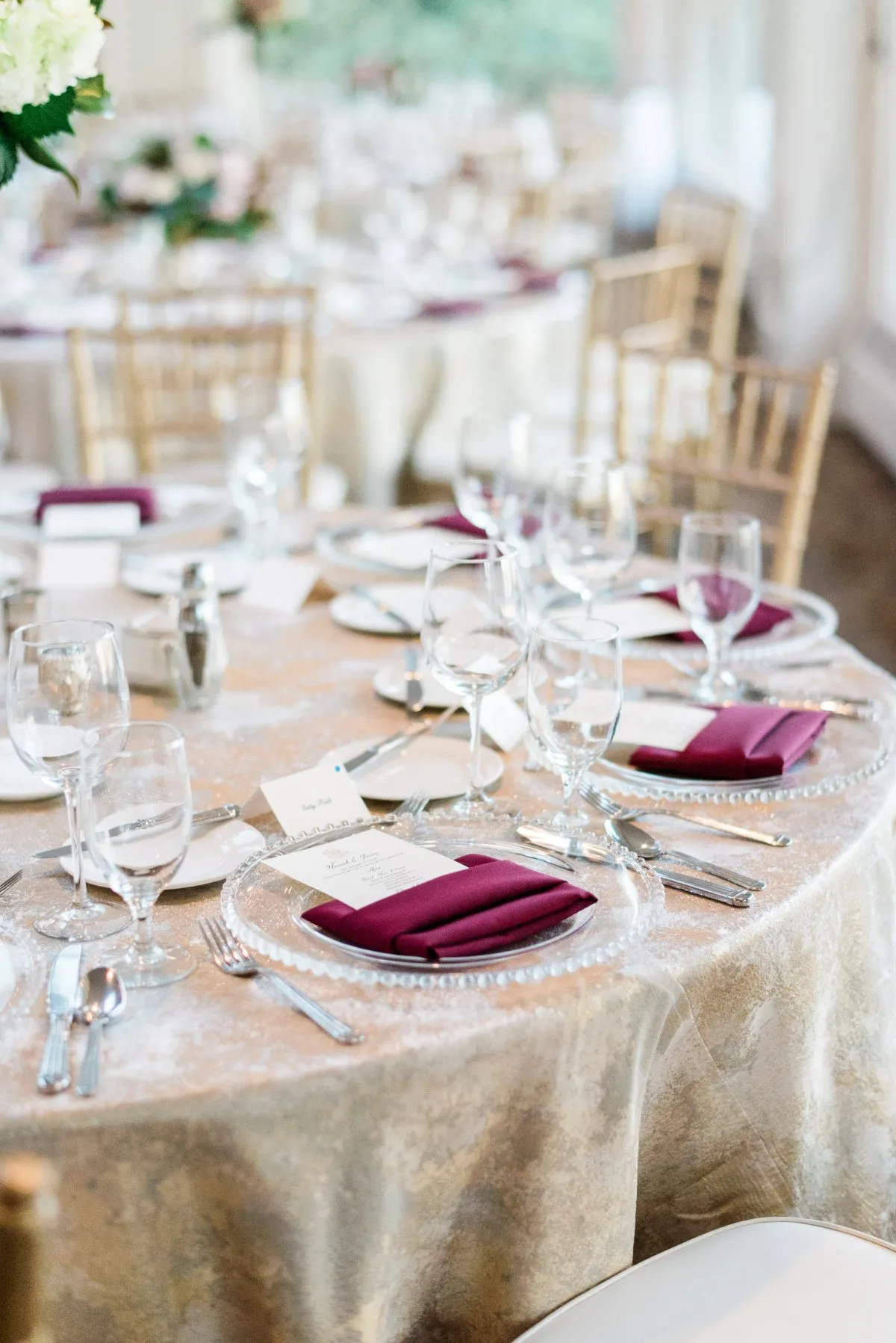
Linen overlays contribute depth and texture to summer tablescapes through layered textiles, natural fiber structure, and the interaction between fabric and surrounding materials. These elements work together to produce a visually engaging table that feels composed rather than flat.
Layered Linen for Visual Dimension
Depth in tablescape design often begins with textile layering. When an overlay sits on top of a base linen or table surface, it introduces a second visual plane that separates the foundation of the table from the decorative elements placed above it.
This layered structure establishes hierarchy within the table design. The base cloth or table provides the background, the overlay forms the central stage of the composition, and the centerpiece and place settings occupy the upper visual layer. Each component remains distinct while still contributing to a unified arrangement.
The drape of linen also supports this layered effect. Soft folds and natural movement in the fabric create gentle shadow and light variations that give the table surface a sense of depth.
Natural Linen Texture in Table Styling
The weave of linen introduces texture that enhances the visual character of the table. Slight irregularities in the fibers produce subtle variations in tone and surface pattern. These variations prevent the table from appearing overly smooth or uniform.
In summer tablescapes, texture contributes to a relaxed yet refined atmosphere. Linen’s tactile quality invites interaction while maintaining a composed aesthetic that suits both formal and casual settings.
Because the material remains visually soft, it allows decorative elements to remain the primary focus while still enriching the background of the table design.
Interaction with Tableware and Decorative Materials
Depth and texture emerge most clearly when linen overlays interact with other materials used in table styling. Smooth ceramics, reflective glassware, and polished metal flatware create contrast against the woven linen surface.
This contrast introduces rhythm across the table and helps guide the eye from one element to another. A centerpiece placed on a linen overlay gains definition, while smaller details such as folded napkins or menu cards appear more intentional against the textured fabric.
Through these interactions, the overlay becomes an integral part of the tablescape rather than a separate decorative element. The linen layer supports the visual balance of the table while enhancing the tactile and aesthetic qualities of the entire setting.
Why Linen Works Well for Summer Tablescapes
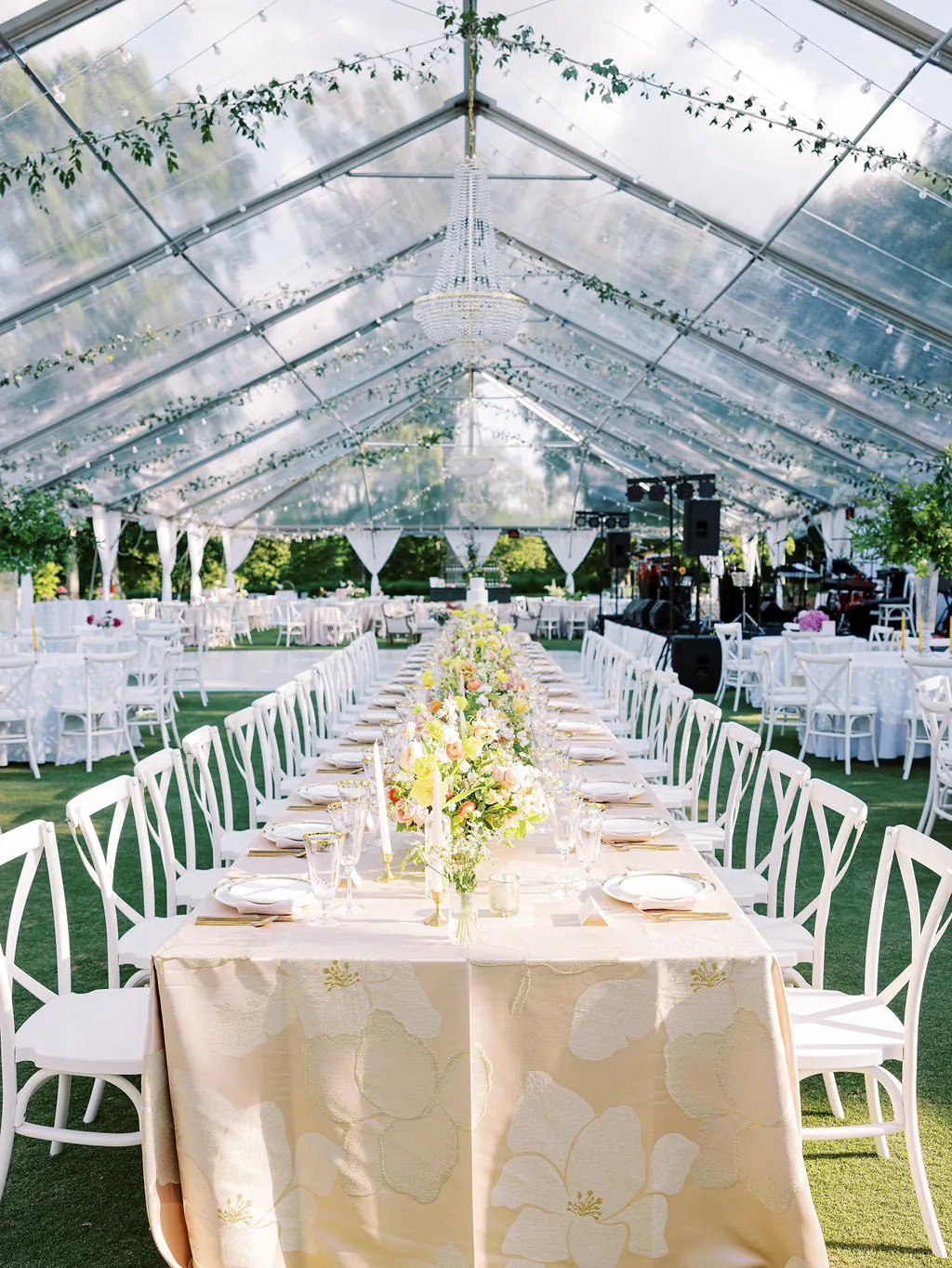
Linen remains one of the most widely used textiles in event table design because it provides both visual refinement and material performance that suit warm-weather gatherings. The fabric supports layered tablescapes while maintaining a light appearance that complements seasonal décor.
Breathable Fabric for Warm Weather Events
Linen fibers allow air to circulate naturally through the weave, which helps maintain comfort during outdoor dining and warm summer evenings. Guests often interact with the table throughout a meal while resting their hands on the surface or adjusting place settings. A breathable fabric supports this experience by remaining comfortable to the touch and visually appropriate for outdoor environments.
Linen’s Natural Appearance in Outdoor Settings
The organic look of linen integrates naturally with outdoor surroundings such as gardens, terraces, and coastal venues. The fabric’s subtle texture echoes the materials commonly found in these spaces, including wood, stone, greenery, and floral arrangements.
Linen also performs well under natural light. The matte surface diffuses brightness rather than reflecting it sharply, which allows the surrounding décor to appear balanced and cohesive. This visual softness contributes to a calm and inviting table atmosphere during daytime and early evening events.
Linen as a Durable Event Textile
Event designers often choose linen because the material maintains its appearance across repeated use and layered installations. The fibers retain structure while developing a softer drape over time, which enhances the relaxed elegance often associated with summer tablescapes.
This durability allows linen overlays to function reliably within complex table arrangements that include runners, napery, and decorative accessories. The fabric holds its shape while supporting the overall composition of the table.
Layering Techniques That Showcase Linen Overlays
Layering plays a central role in tablescape design because it creates visual dimension and organizes the placement of decorative elements. Linen overlays form the foundation of many layered table arrangements and allow designers to build depth across the table surface.
Basic Overlay Layering
The most common layering technique begins with a neutral base cloth or exposed table surface. A linen overlay is placed above this foundation so the fabric defines the central area of the table.
This arrangement creates a clear visual boundary where centerpieces, candles, and place settings can be positioned. The contrast between the base layer and the overlay produces subtle dimension while maintaining a balanced table presentation.
Combining Overlays with Table Runners
Table runners can be layered over linen overlays to add structure and guide the visual flow across the table. A runner placed along the centerline anchors floral arrangements and decorative elements while reinforcing the layered composition of the tablescape.
Designers often select runners that either contrast with or complement the overlay’s color and texture. This combination produces a visually organized table where each textile layer contributes to the overall design.
Color Blocking with Linen Overlays
Color blocking introduces contrast by pairing linens in different hues. A soft neutral tablecloth combined with a richer overlay color can create a focal area that draws attention toward the center of the table.
This technique works particularly well in summer tablescapes where seasonal palettes incorporate pastel tones, natural hues, or vibrant accents. Repeating the overlay color in napkins, floral arrangements, or small decorative details helps unify the entire table design.
Color Palettes and Texture Combinations for Summer Tablescapes
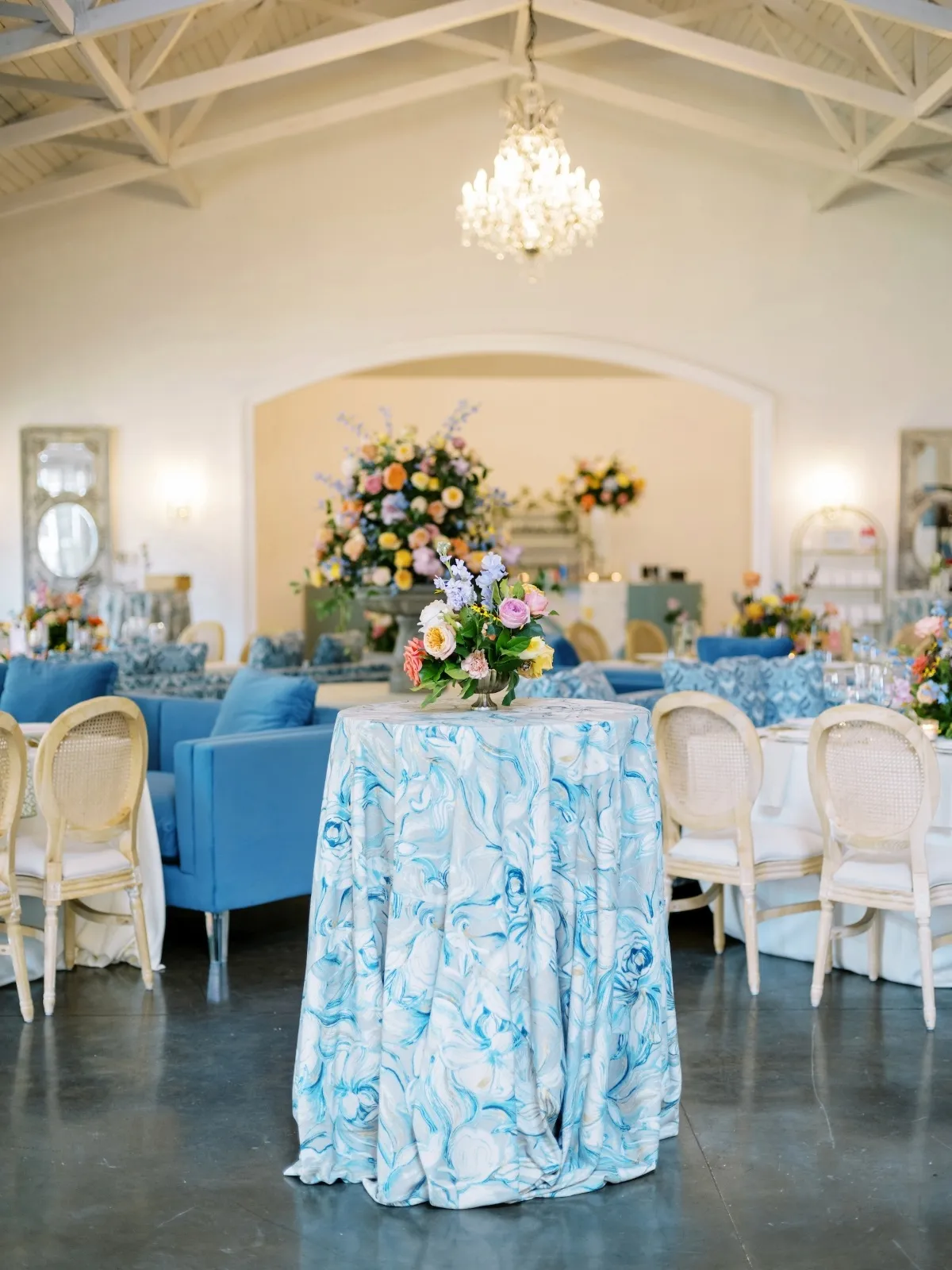
Color and texture determine how a summer tablescape feels and how the individual elements relate to one another. Linen overlays provide a flexible foundation for both because the fabric holds color well and introduces natural surface variation that enriches the overall composition.
Soft Pastel Palettes for Summer Events
Pastel color palettes are frequently used in summer tablescapes because they complement natural light and outdoor settings. Linen overlays in shades such as blush, pale blue, lavender, or sage create a soft visual base that supports floral arrangements and light tableware.
These tones work particularly well for daytime gatherings where the goal is to maintain an airy atmosphere. The overlay becomes part of the visual landscape of the table while allowing glassware, candles, and greenery to stand out clearly.
Bold Seasonal Color Pairings
Stronger color pairings create a more dynamic visual effect while still maintaining balance across the table. Linen overlays in coral, terracotta, or deep botanical greens can introduce energy to a summer tablescape and provide contrast against neutral table settings.
Repeating these colors in smaller details such as napkins, ribbons, or floral accents reinforces the palette and creates a cohesive visual flow throughout the table arrangement.
Mixing Linen with Complementary Materials
Texture becomes more pronounced when linen interacts with other materials commonly used in table design. Smooth ceramics, reflective glassware, natural wood chargers, and metallic flatware create contrast against linen’s woven surface.
These material contrasts give the table depth and help guide the eye across the arrangement. A layered mix of textures keeps the table visually engaging while maintaining a composed and balanced design.
Styling Linen Overlays for Weddings and Upscale Events
Elegant tablescapes depend on thoughtful composition, where each design element supports the overall presentation of the event. Linen overlays play an important role in these environments because they provide a structured textile layer that anchors the table design.
Linen Overlays in Wedding Tablescapes
Wedding tables often feature detailed place settings, floral centerpieces, and coordinated décor elements. Linen overlays help frame these components by defining the central area of the table where the design comes together.
The overlay provides visual grounding for centerpiece arrangements and ensures that decorative elements remain clearly defined within the table composition. This structure helps the entire tablescape feel cohesive and intentional.
Creating Cohesive Event Table Designs
A well styled table reflects the broader design language of the event. Linen overlays contribute to this cohesion by linking colors, materials, and decorative accents used throughout the venue.
When the color of the overlay appears in napkins, floral arrangements, or printed stationery, the table becomes part of a larger visual narrative that connects the entire event environment.
Elegant Table Styling Principles
Balanced tablescapes often follow several design principles that help maintain clarity and refinement. Symmetry in place settings creates order across the table, while varying centerpiece heights introduce movement and visual interest.
Careful restraint also contributes to elegance. A limited number of thoughtfully chosen elements allows the linen overlay, centerpiece, and tableware to work together harmoniously without overcrowding the table.
Common Design Mistakes When Using Linen Overlays

Linen overlays enhance tablescapes when they are used with careful attention to proportion, color harmony, and layering. Certain design missteps can disrupt the visual balance of the table and reduce the impact of the overall composition.
Incorrect Overlay Size or Placement
Overlay dimensions should relate to the size and shape of the table. An overlay that is too small appears disconnected from the rest of the tablescape and fails to frame the centerpiece effectively. An excessively large overlay can dominate the table and obscure other decorative elements.
Proper placement also influences the final presentation. A centered overlay establishes symmetry and order, while diagonal placement introduces a more dynamic visual structure. The chosen arrangement should align with the overall style of the event.
Too Many Layers or Competing Textures
Layering contributes depth to a table design, yet excessive layering can make the composition appear crowded. Overlays, runners, napery, and decorative textiles all add visual weight. When too many textured materials appear together, the table loses clarity and focal direction.
A well composed tablescape uses a limited number of layers so each element retains its visual role within the design.
Unbalanced Color Combinations
Color harmony plays a critical role in maintaining cohesion across the table. Overlays should support the broader event palette rather than compete with other elements. When colors clash or appear unrelated, the table can feel fragmented.
A structured palette that includes a dominant tone, a secondary accent, and a neutral foundation helps maintain visual consistency across the entire tablescape.
Frequently Asked Questions
Can linen overlays be used for outdoor summer events?
Linen overlays perform well in outdoor settings because the fabric’s breathable weave supports comfort during warm weather gatherings. The natural texture of linen also complements garden environments, terrace venues, and open-air dining arrangements.
How do linen overlays add texture to a tablescape?
The woven structure of linen introduces subtle surface variation that enhances the visual character of the table. When combined with smooth materials such as ceramics or glassware, the contrast between textures creates depth and visual interest.
What colors work best for summer linen overlays?
Summer tablescapes often incorporate light and seasonal colors. Soft tones such as blush, sage, lavender, and pale blue create an airy atmosphere, while warmer shades like coral, terracotta, and botanical greens introduce stronger visual contrast.
How should linen overlays be layered on event tables?
A common layering approach begins with a base tablecloth or exposed table surface. The linen overlay is placed above this layer to define the central portion of the table. Additional elements such as runners, centerpieces, and place settings are then arranged within this framed area.
Are linen overlays suitable for casual gatherings?
Linen overlays adapt easily to both relaxed and formal settings. Simpler layering and lighter colors create an informal table atmosphere, while deeper tones and structured arrangements support more formal events.
Conclusion
Linen overlays play an important role in shaping summer tablescapes by introducing layered texture, visual depth, and a refined foundation for table styling. When positioned thoughtfully, an overlay helps organize the composition of the table while highlighting centerpieces, place settings, and decorative accents. The natural weave of linen contributes tactile richness that complements glassware, florals, ceramics, and metallic details often found in event table design.
Summer tables benefit especially from linen’s breathable structure and soft visual presence. The fabric supports elegant styling while maintaining the light, relaxed atmosphere that warm-weather gatherings often require. Through careful layering, coordinated color palettes, and balanced material combinations, linen overlays help transform simple table arrangements into cohesive and visually engaging tablescapes.
Event planners and hosts seeking to enhance their summer table presentations can use linen overlays to create depth, texture, and visual harmony across the entire dining environment. Curated Linen Collection offers premium linen overlays designed to support sophisticated event styling and beautifully composed tables for weddings, seasonal gatherings, and elevated celebrations.