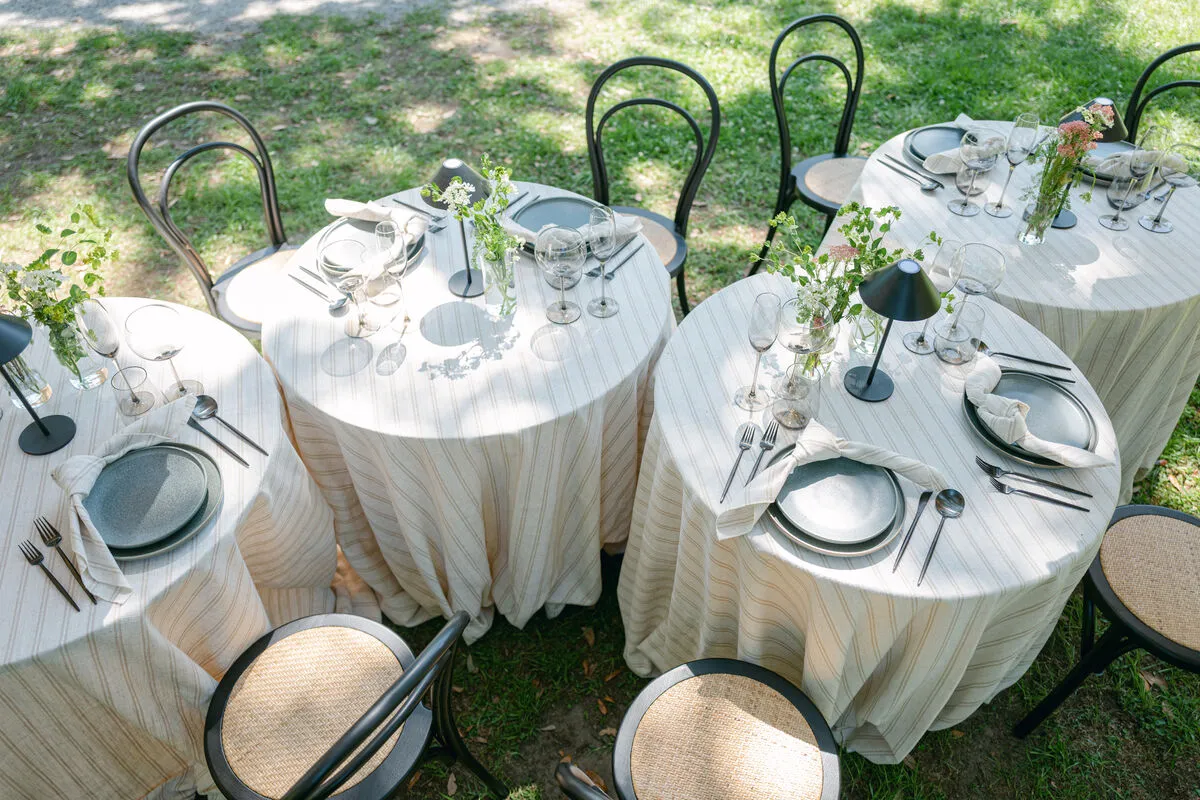
Linen overlays offer an effective way to style summer event tables while preserving a light and uncluttered atmosphere. They work well when a table requires decorative layering without the visual weight of a full additional tablecloth. Event planners and hosts frequently use linen overlays for outdoor receptions, garden parties, weddings, and seasonal celebrations where tables should appear elegant while remaining visually open.
An overlay sits on top of a base linen or directly on the table surface, introducing texture and color contrast while maintaining a balanced arrangement. This approach allows the table design to remain refined while highlighting the natural qualities of linen. The fabric’s soft weave and relaxed drape complement warm weather settings and pair naturally with simple centerpieces, organic materials, and understated tableware.
Thoughtful placement of linen overlays helps define the structure of the table, frame place settings, and introduce depth to the overall composition. The sections below explain how linen overlays function within summer tablescapes and outline the situations where they provide the greatest styling advantage.
When to Use Linen Overlays for Summer Events
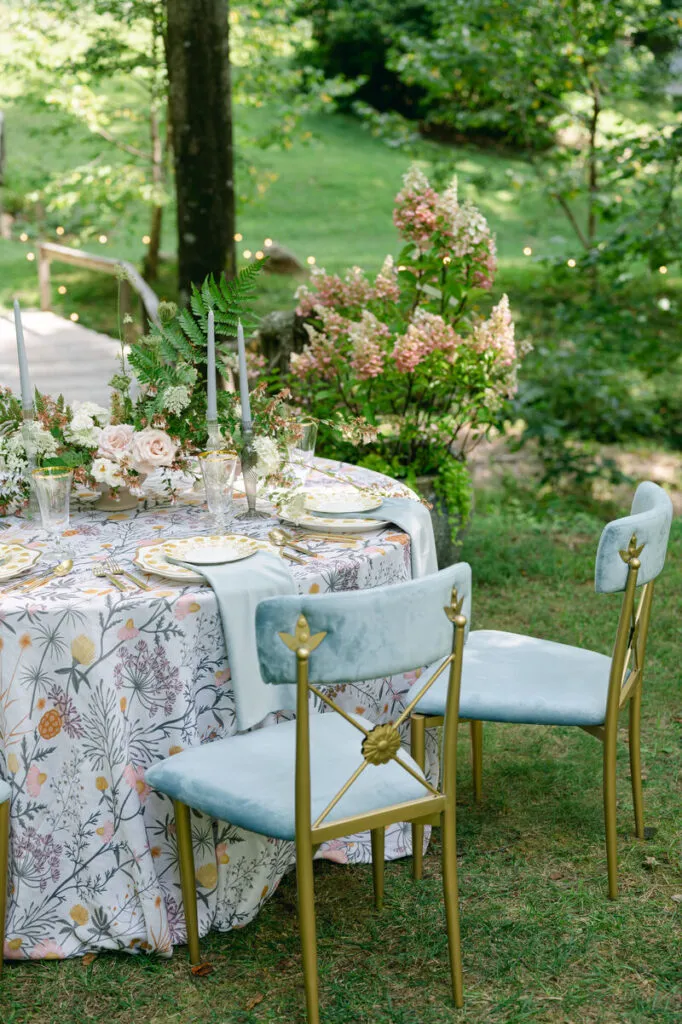
Linen overlays serve a practical and decorative role in summer event tablescapes. They introduce layered styling while maintaining the light visual character that suits warm weather gatherings. Hosts and event planners often choose overlays when a table requires additional texture, color contrast, or visual structure without adding excessive décor.
Summer events frequently take place in open or natural settings where table designs benefit from simplicity and breathable materials. Linen overlays help achieve this balance. They allow planners to refine the appearance of the table while keeping the setting airy and cohesive.
Outdoor Events Where Lightweight Layering Matters
Outdoor summer events often require table styling that feels elegant while remaining visually relaxed. Linen overlays provide a simple way to introduce texture and color without overwhelming the table design.
Garden weddings, backyard celebrations, vineyard receptions, and terrace dinners frequently use overlays because they complement natural surroundings. The fabric drapes softly and pairs easily with seasonal flowers, greenery, wood tables, and neutral dinnerware. This combination creates a refined setting that aligns with the atmosphere of outdoor gatherings.
Events That Benefit from Decorative Table Layering
Certain event tables benefit from additional styling that helps them stand out within the overall layout. Linen overlays provide a subtle way to highlight these tables without introducing heavy decorative elements.
Wedding reception tables, head tables, sweetheart tables, and cake tables often incorporate overlays to create visual distinction. The layered linen draws attention to these focal areas while maintaining consistency with the rest of the table design.
Situations Where Overlays Work Better Than Full Tablecloths
Some summer tablescapes benefit from partial coverage rather than full table linens. Linen overlays allow the table surface to remain visible while adding decorative structure.
This approach works well when planners want to showcase wooden farmhouse tables, rattan surfaces, or textured tabletops. An overlay introduces color and softness while allowing the underlying material to contribute to the overall aesthetic. The result feels balanced and intentional while preserving the natural character of the table.
How Linen Overlays Enhance Summer Tablescapes Without Overcrowding
A well designed summer table maintains visual balance while incorporating decorative elements. Linen overlays help achieve this balance by adding depth and contrast without introducing unnecessary complexity.
The key to successful styling lies in proportion, spacing, and thoughtful layering. When overlays are placed with intention, they frame the center of the table and support the overall composition without competing with other elements.
Creating Visual Depth Through Layering
Layering allows planners to build interest into the tablescape while maintaining a cohesive appearance. A neutral base linen paired with a contrasting overlay introduces dimension that draws the eye toward the center of the table.
This technique works particularly well for summer events because it provides decorative impact without requiring numerous design elements. The overlay acts as the central visual feature while the surrounding tableware and décor remain restrained.
Using Negative Space for Airy Summer Tables
Negative space plays an important role in summer table styling. Allowing open areas of the table to remain visible prevents the design from feeling crowded and helps the linen texture stand out.
Planners can achieve this effect by spacing centerpieces thoughtfully and limiting the number of decorative objects. The overlay establishes the focal point while the surrounding space supports a clean and elegant presentation.
Choosing Overlay Sizes That Maintain Table Balance
Proper sizing ensures that the overlay complements the table rather than dominating it. The linen should relate proportionally to the table dimensions so that the layered design appears intentional.
A well sized overlay frames the center of the table while leaving consistent margins of the base linen or table surface visible. This proportional balance keeps the table visually structured and prevents the design from appearing heavy or cluttered.
Overlay Placement Styles for Elegant Summer Tables

The placement of a linen overlay influences how the entire tablescape appears. A thoughtful arrangement creates structure and visual interest while maintaining a clean and balanced table design. Summer events often benefit from overlay placements that emphasize openness and subtle layering.
Event planners typically select placement styles that complement the table shape, centerpiece size, and overall event theme. A consistent placement approach across all tables also helps maintain visual harmony throughout the event space.
Classic Center Placement
Classic center placement positions the overlay evenly across the table so that each side hangs with equal proportion. This approach creates a symmetrical appearance that works well for formal summer events such as wedding receptions or elegant dinner gatherings.
A centered overlay frames the table setting and supports the centerpiece without competing with it. The balanced proportions also allow the base linen or table surface to remain visible, which helps maintain a refined and uncluttered look.
Diamond Overlay Placement for Visual Interest
Diamond placement rotates the overlay so that its corners extend toward the edges of the table. This angled arrangement introduces visual movement and creates a layered effect that feels dynamic yet controlled.
This styling method works particularly well for square overlays placed on round tables. The diamond shape naturally frames the center of the table and draws attention to floral arrangements or decorative accents.
Layering Multiple Overlays for Dimension
Layering two overlays adds additional texture and depth to the table design. Event planners often place a neutral base overlay beneath a second overlay in a contrasting color or texture.
The layers should remain restrained and proportional so that the table retains a light and elegant appearance. Subtle contrasts in color or weave create visual richness while preserving the clean structure that defines sophisticated summer tablescapes.
Choosing Colors and Patterns for Summer Linen Overlays
Color selection plays a central role in creating a cohesive summer tablescape. Linen overlays allow hosts to introduce seasonal tones and subtle patterns that complement the overall event palette.
A thoughtful color palette ensures that the overlays enhance the table without overwhelming other elements. Neutral foundations paired with selective accent colors often produce the most balanced and visually pleasing results.
Neutral Linen Palettes for Elegant Events
Neutral tones create a calm and sophisticated base for summer table designs. Shades such as ivory, sand, taupe, and soft grey allow the natural texture of linen to remain visible while supporting a wide range of decorative styles.
These colors also pair easily with seasonal floral arrangements and natural materials. Neutral overlays often work well for weddings and formal summer gatherings where the overall design favors understated elegance.
Pastel and Seasonal Color Palettes
Pastel colors introduce freshness and softness to summer tables. Blush pink, sage green, powder blue, and lavender complement warm weather events and pair naturally with floral centerpieces.
Using overlays in these colors helps create a seasonal atmosphere while maintaining a refined appearance. The gentle tones blend easily with neutral table settings and support a relaxed yet elegant event environment.
Using Accent Colors Without Overcrowding the Table
Accent colors add contrast and visual interest when used carefully. A deep navy, forest green, or muted terracotta overlay can introduce depth when placed over a lighter base linen.
The key to successful color layering lies in restraint. One strong accent paired with neutral elements maintains clarity within the table design and prevents the tablescape from appearing overly busy.
Minimalist Summer Table Styling with Linen Overlays
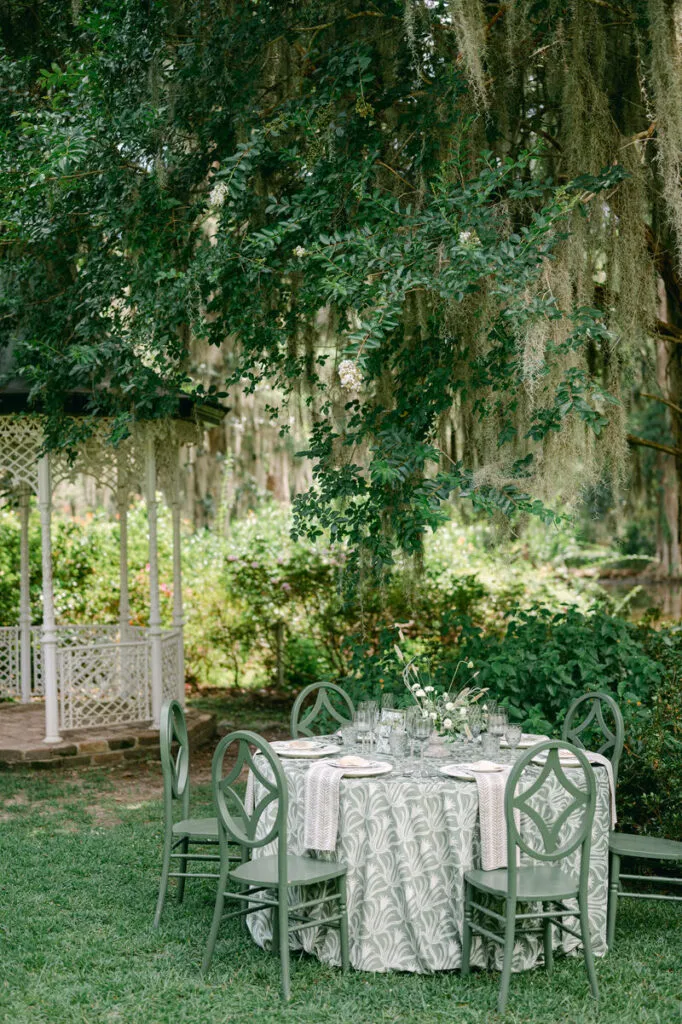
Minimalist styling allows linen overlays to become a central visual element within the tablescape. Summer events often benefit from designs that prioritize space, texture, and carefully selected decorative elements. A restrained approach keeps the table elegant while ensuring that each component contributes to the overall composition.
Linen overlays support this style by providing texture and structure without requiring numerous decorative additions. When combined with simple centerpieces and thoughtfully chosen tableware, the overlay becomes a subtle focal point that enhances the entire table setting.
Simple Centerpieces That Complement Linen
Centerpieces for minimalist summer tables should remain understated and proportional to the table size. Small arrangements allow the linen texture to remain visible while introducing natural elements that reinforce the seasonal theme.
Single-stem floral arrangements, small bouquets of seasonal flowers, or low greenery arrangements often work well. These choices provide color and freshness while maintaining the open appearance that linen overlays help establish.
Tableware That Enhances Linen Texture
Tableware selection plays an important role in reinforcing the refined appearance of a linen tablescape. Pieces with clean shapes and natural finishes support the fabric’s texture and allow the overall design to remain cohesive.
Ceramic plates, matte flatware, and wooden chargers often complement linen particularly well. These materials create gentle contrast while preserving the soft visual character of the table.
Balancing Decorative Elements on the Table
Balanced placement of décor ensures that the table maintains a composed appearance. Each element should have enough space so that the arrangement feels intentional and visually calm.
Hosts and planners often achieve this balance by limiting the number of decorative pieces and spacing them evenly. The linen overlay anchors the table design, while the surrounding elements support the overall structure without competing for attention.
Practical Tips for Styling Linen Overlays at Summer Events
Careful preparation and thoughtful arrangement help linen overlays look polished throughout an event. Planners often take time to test placements and adjust proportions before the final table setup. This preparation ensures that the linens complement the event design and remain consistent across all tables.
Simple preparation steps also help the overlays maintain their appearance during outdoor gatherings or long receptions.
Preparing and Arranging Overlays Before the Event
Testing overlay placement ahead of the event allows planners to confirm the visual balance of the table design. Setting up a sample table with the intended linens, tableware, and centerpiece helps determine the most effective placement style.
Once the preferred arrangement is selected, the same layout can be repeated across all guest tables to maintain a cohesive look throughout the venue.
Preventing Wrinkles During Setup
Smooth linens contribute significantly to the overall elegance of a tablescape. Overlays should be pressed or steamed before the event to remove creases and ensure that the fabric drapes naturally.
During setup, planners often place overlays shortly before the final table styling begins. This timing helps maintain the fabric’s smooth appearance while reducing the chance of wrinkles forming during preparation.
Maintaining Linen Quality Throughout the Event
Proper handling helps preserve the appearance of linen overlays throughout the event. Gentle placement and careful adjustments prevent unnecessary creasing and ensure that the overlays remain centered and balanced.
After the event, folding the linens neatly and storing them in a cool, dry location helps maintain their texture and color for future use. Consistent care ensures that linen overlays remain a dependable styling element for many summer gatherings.
Frequently Asked Questions
Can linen overlays be used without a tablecloth?
Yes. Linen overlays can be placed directly on wooden or textured tables when the table surface forms part of the event aesthetic. This approach works particularly well for rustic venues, vineyard settings, and outdoor receptions where natural materials contribute to the overall design.
What size overlay works best for round tables?
Square overlays sized between 72 and 90 inches often work well for round tables. When rotated into a diamond placement, the corners drape naturally over the table edges and create a layered appearance that frames the centerpiece.
How do overlays differ from table runners?
Table runners extend along the length of the table and highlight the centerline of the setting. Overlays cover a larger portion of the table surface and create a layered visual structure that emphasizes the central area of the tablescape.
What colors work best for summer events?
Soft neutrals, pastel tones, and natural shades frequently complement summer events. Colors such as ivory, blush, sage green, and powder blue blend well with seasonal flowers and outdoor venues while maintaining an elegant and relaxed atmosphere.
Conclusion
Linen overlays provide a refined way to style summer event tables while maintaining a light and balanced appearance. Their layered placement introduces texture, color contrast, and visual structure without requiring excessive decorative elements.
Thoughtful color selection, careful placement, and minimalist styling allow linen overlays to enhance the overall tablescape while preserving the relaxed elegance associated with warm weather gatherings. With the right combination of linens, centerpieces, and tableware, hosts can create summer tables that feel polished, welcoming, and visually harmonious.