
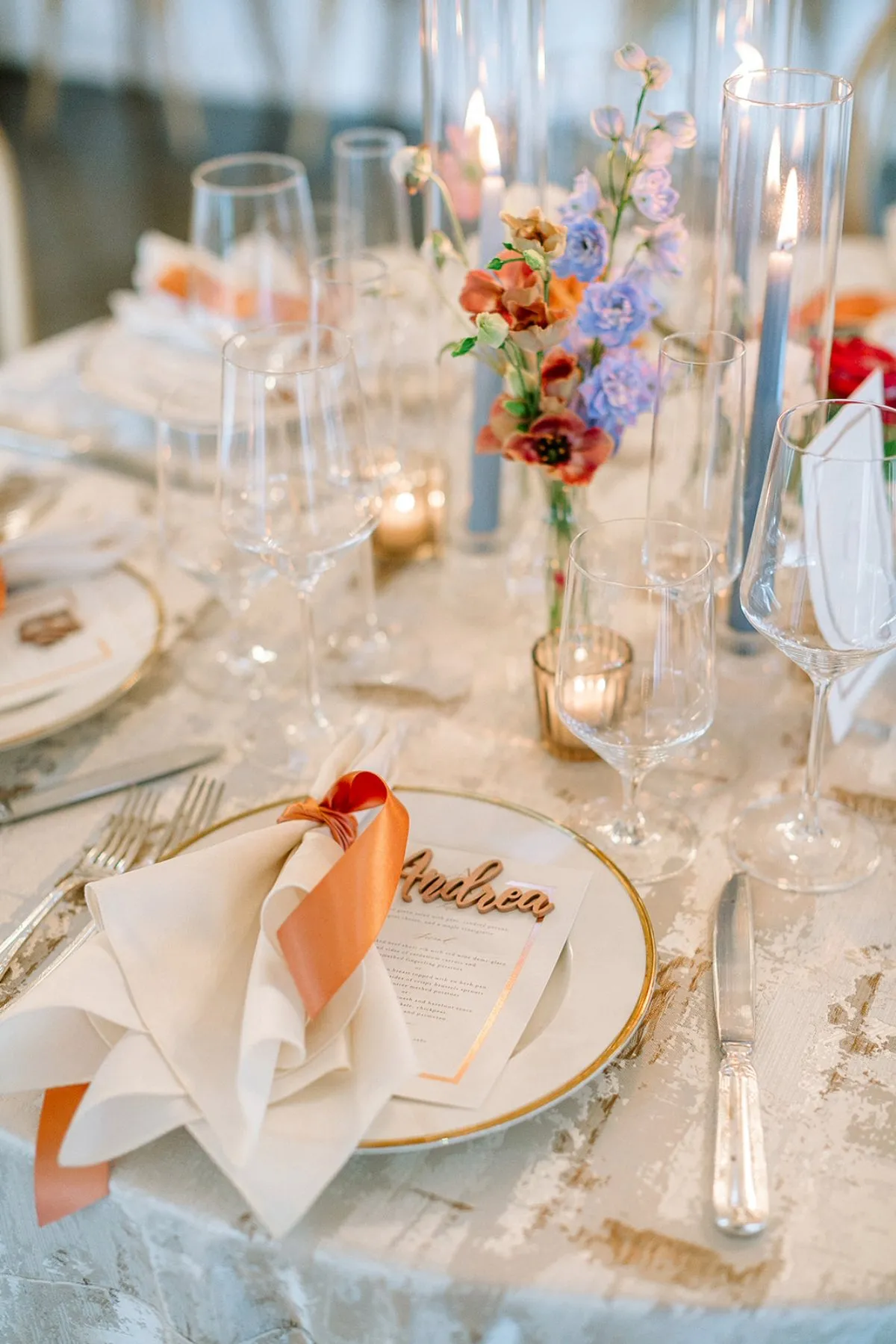
The sweetheart table holds a unique place within a wedding reception. It frames the newlyweds during dinner, speeches, toasts, and many of the photographs that define the celebration. Although it may seat only two people, its visual influence often extends across the entire room.
Sweetheart table linens help establish that presence. A distinctive pattern, refined texture, expressive color, or custom detail can separate the couple’s table from the surrounding guest tables while keeping it connected to the wedding’s broader design. The goal is not to add as many decorative elements as possible. A successful design uses thoughtful editing, clear visual hierarchy, and a linen treatment that supports the couple rather than competing with them.
By considering the table as a complete scene, couples and event professionals can create a focal point that looks intentional from across the reception space and feels personal when viewed up close.
Decide What Role the Sweetheart Table Should Play
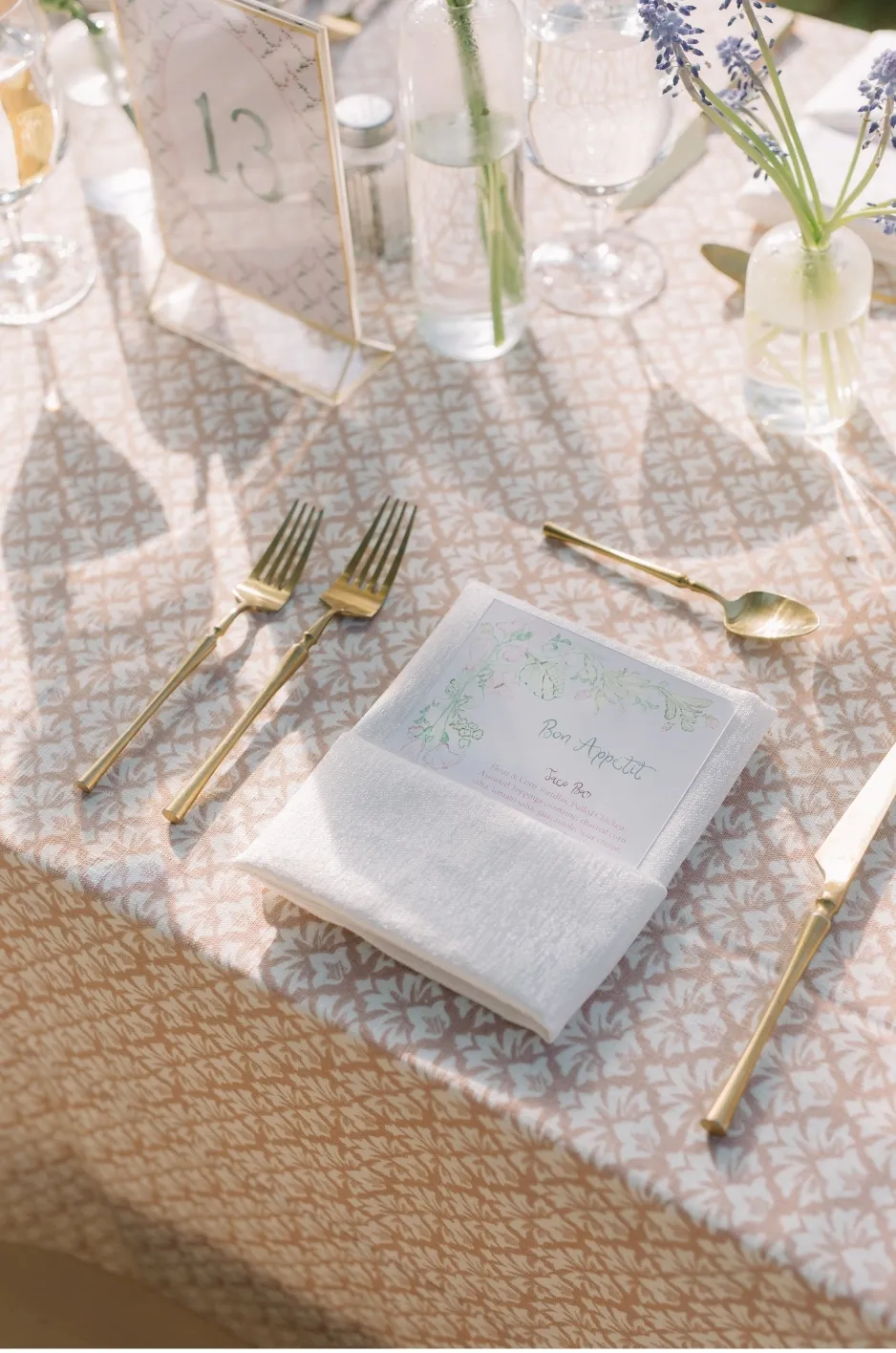
Before selecting sweetheart table linens, determine how the table should relate to the rest of the reception. It can function as an elevated continuation of the guest tables, introduce a carefully controlled contrast, or present a more personal version of the overall wedding design.
Defining this role early helps prevent the table from feeling disconnected. It also gives the planner, florist, stationer, rental team, and other creative partners a shared direction for coordinating the linen with the surrounding details.
Echo the Reception’s Existing Design Language
The sweetheart table should feel like part of the same visual story as the rest of the room. This does not mean it must use the exact linen found on every guest table.
A color, motif, texture, or border from the reception design can be carried into the sweetheart table in a more prominent way. For example, a pattern used sparingly on guest-table napkins may become the primary tablecloth for the couple’s table. A subtle color from the floral arrangements may appear as a richer, more saturated linen at the focal point.
Repeating a familiar element creates continuity while allowing the sweetheart table to maintain its own identity.
Intensify One Signature Element
Rather than making every detail more elaborate, choose one feature to amplify. This could be a botanical print, a sculptural texture, a custom border, a saturated color, or an expressive textile with visible movement.
When one linen element receives clear visual priority, the remaining details can support it. A bold patterned tablecloth may work best with restrained tableware and florals. A quieter linen may provide the right foundation for a more architectural backdrop or floral installation.
This approach creates distinction without visual clutter.
Use Contrast With a Specific Purpose
Contrast can help a sweetheart table register clearly within a large room. A darker linen may stand out against pale guest tables, while a patterned textile can create energy within a reception built around refined solids.
The contrast should still connect to another part of the wedding. A contrasting linen might repeat the color of the invitations, the floral palette, the bridesmaids’ attire, or a detail within the venue.
Purposeful contrast feels integrated. Contrast introduced without a connection to the rest of the event can make the table appear separate from the overall design.
Frame the Couple, Not Only the Tabletop
A sweetheart table is experienced as a portrait of the couple within the reception space. Guests see the linen together with the chairs, attire, florals, lighting, and background. These elements should frame the newlyweds and keep them at the center of the composition.
This broader perspective is especially important when choosing luxury sweetheart table linens. A beautiful fabric may not create the intended effect if it blends into the couple’s attire, competes with the backdrop, or disappears behind oversized flowers.
Create Separation Between Attire and Linen
Consider how the couple’s attire will appear against the linen. Light-colored clothing placed against a pale tablecloth and pale backdrop can lose definition, particularly in photographs.
Contrast does not always require a dark fabric. Pattern, texture, trim, or a stronger border can create enough separation to outline the couple naturally. A linen with a visible motif may provide definition while preserving a soft, romantic palette.
The table should support the couple visually without becoming the most dominant element in every image.
Treat the Chairs as Part of the Textile Composition
Sweetheart table chairs have a strong effect on the finished scene because they remain visible behind and beside the table. Their upholstery, wood tone, metal finish, height, and silhouette should work with the selected linen.
A richly patterned tablecloth may pair well with chairs in a quieter material. A refined solid linen may support more expressive seating with curved forms, detailed upholstery, or distinctive finishes.
Coordinated pillows can also extend the textile story beyond the tabletop. They may repeat a color or motif from the linen while adding comfort and visual continuity. The connection should feel considered rather than overly matched.
Preserve the Couple’s Sightlines
The newlyweds should remain visible to their guests and able to see the room comfortably. Tall florals, oversized candles, or dense arrangements placed directly between the couple and the reception can interfere with that connection.
Lower arrangements, asymmetrical florals, or designs that extend toward the outer edges of the table often create a more open composition. Abundance can also be introduced through floor-level flowers, nearby structures, or a backdrop rather than concentrating every detail on the tabletop.
The linen remains more visible when the center of the table is not overloaded.
Choose One Dominant Linen Gesture
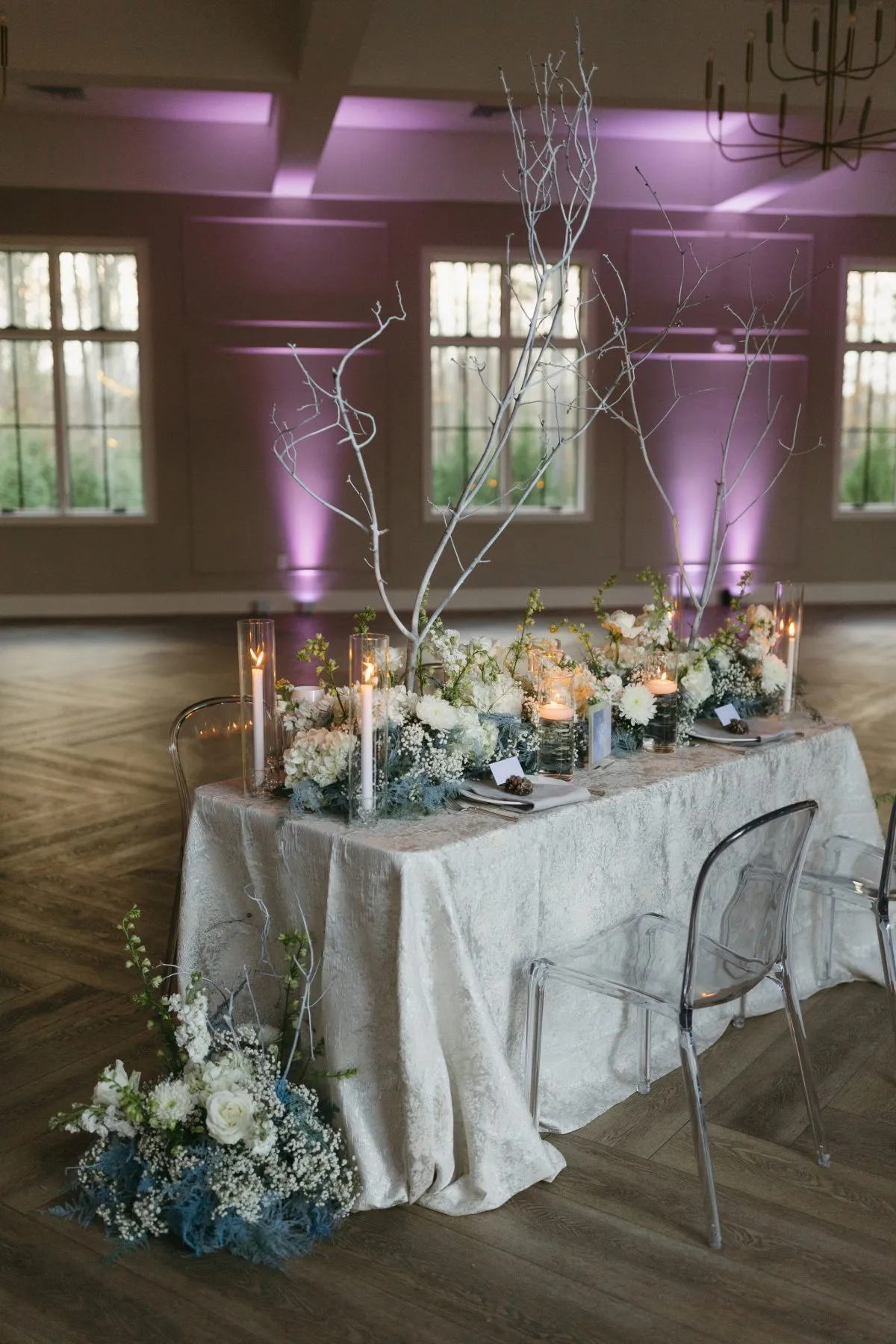
A sweetheart table has a limited surface area, which means every textile choice carries greater visual weight. Combining a bold tablecloth, dramatic runner, layered overlay, patterned napkins, and several additional fabric accents can make the composition feel unresolved.
A stronger result usually comes from choosing one dominant linen gesture. Supporting textiles can then reinforce that decision without competing for attention.
Let a Patterned Tablecloth Become the Main Statement
A full patterned tablecloth can define the entire sweetheart table. Because the table is smaller than most guest tables, the pattern may appear more concentrated and expressive.
Consider the scale of the design and how much of it will remain visible after the place settings and floral elements are installed. Large botanical or abstract motifs can create an editorial effect, while smaller repeats may read as texture from a distance.
When the tablecloth carries the main statement, simpler tabletop elements often allow the pattern to remain clear.
Use a Runner to Reveal the Table’s Character
A runner can be effective when the table itself has a distinctive material or finish. Wood, stone, mirrored surfaces, and specialty-built tables may contribute to the design and should not always be fully concealed.
The runner can connect the couple’s place settings, floral accents, candles, and front-facing details while leaving part of the table visible. It can also introduce a custom print or pattern without covering the entire surface.
The width and placement should feel intentional. A runner that is too narrow may appear incidental, while an excessively wide one can function like an incomplete tablecloth.
Add Dimension With a Specialty Overlay
An overlay can introduce translucency, dimensional texture, pattern, or a defined border. It works best when it changes the table’s silhouette or surface in a meaningful way.
For example, a patterned overlay over a solid base can create visual depth, while a textured overlay may bring movement to a quiet color palette. The relationship between the base and upper layer should remain visible enough to justify the combination.
Layering should add clarity to the design rather than complexity for its own sake.
Reserve Supporting Textiles for Finishing Details
Napkins, chair pillows, and smaller fabric accents can reinforce the primary linen gesture. They should not attempt to become separate focal points.
A napkin may repeat one color from a patterned tablecloth. A pillow may carry a quieter version of the same motif. A subtle textile accent can also connect the sweetheart table to guest tables without duplicating the complete linen treatment.
These supporting pieces help the table feel finished while preserving a clear hierarchy.
Compose the Table in Three Visual Layers
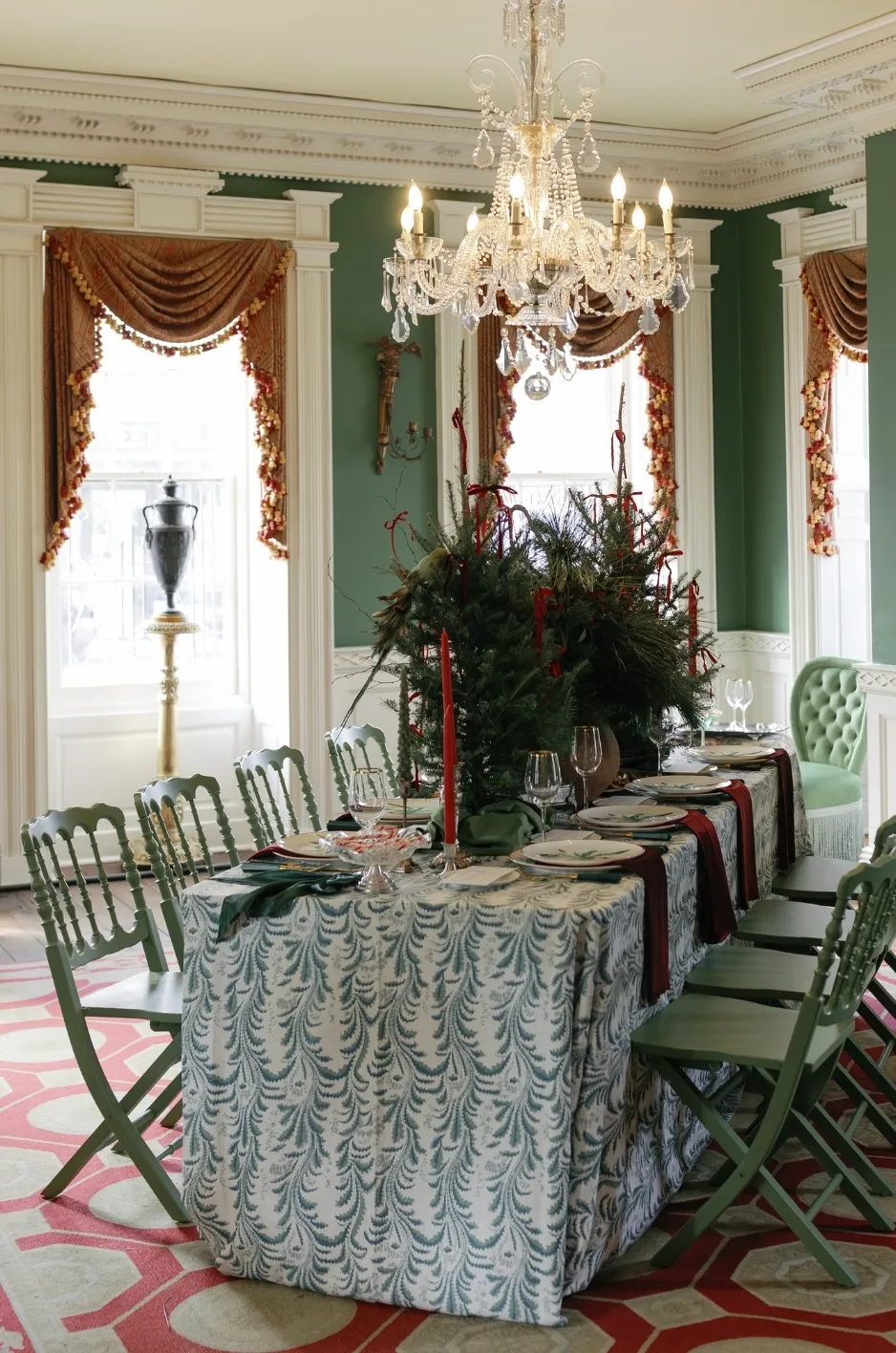
A statement sweetheart table is not a flat arrangement. It has a foreground, a central portrait area, and a background. Designing these three layers together creates depth and prevents the linen, florals, chairs, and backdrop from feeling like separate installations.
The layers should guide attention toward the couple. Each can contain detail, but one should remain dominant.
Build the Foreground Around the Linen Silhouette
The foreground includes the visible front and sides of the table, the tablecloth drop, any border or motif placement, and decorative elements positioned close to the floor.
This area is often highly visible in photographs. A distinctive border, custom print, or carefully placed pattern can give the table a strong identity before guests notice the smaller tabletop details.
Floor-level florals may enhance the composition, but they should not conceal the entire linen. Allowing part of the textile to remain visible helps establish the table’s silhouette.
Keep the Middle Layer Refined
The middle layer contains the couple, chairs, place settings, centerpiece, candles, and primary linen surface. Because this is the most functional area, it benefits from careful editing.
Leave sufficient space around both place settings. The couple should be able to dine comfortably, place personal items nearby, and move without disturbing the design.
Negative space also makes luxury materials easier to appreciate. A refined linen, expressive plate, or custom menu gains more impact when it is not surrounded by unnecessary objects.
Connect the Background Without Repeating It
The background may include drapery, architectural details, windows, scenic views, floral structures, lighting, or a ceremony installation repurposed for the reception.
It should connect to the table through color, shape, or mood without repeating every detail. A botanical linen does not require an identical botanical backdrop. A color from the textile may appear in the flowers, lighting, or drapery instead.
This creates cohesion while allowing each layer to contribute something different.
Give One Layer Visual Priority
Either the linen, floral design, or backdrop should hold the greatest visual weight. When all three are equally bold, the couple can become secondary within their own setting.
A statement patterned linen may need a quieter background. An elaborate floral arch may work best with a more restrained textile. A dramatic architectural setting may call for one clear linen color rather than several competing details.
Establishing priority helps the complete scene feel composed rather than crowded.
Make Pattern Placement Feel Deliberate
Pattern placement matters on a sweetheart table because a large part of the linen is visible from one primary direction. A motif that falls awkwardly, disappears behind the place settings, or becomes cropped at the front can weaken the intended design.
Planning the position of the pattern allows the textile to function as a deliberate visual element rather than a decorative surface selected only for its color.
Match the Motif Scale to the Table
A large-scale print can create immediate impact, but the table must display enough of the design for the motif to remain recognizable. On a very small table, an oversized pattern may become fragmented.
Smaller repeats offer consistency and may read as texture from across the room. They can be useful when the surrounding floral or backdrop design already has a strong visual presence.
The appropriate scale depends on the table dimensions, viewing distance, and amount of surface that will remain visible.
Position Borders and Motifs for the Primary View
Determine which side of the table will face the room and the photographer. This front-facing section should receive particular attention when the linen includes a border, crest, monogram, or dominant motif.
Custom elements should not fall beneath chairs, disappear around the back of the table, or become hidden behind dense arrangements. The primary view should appear deliberate even before the tableware is added.
For a patterned tablecloth, rotating the linen slightly may change the entire composition.
Repeat Color Rather Than Copying the Full Pattern
The sweetheart table can feature a distinctive print without requiring the same design on every guest table.
Select one or two colors from the pattern and repeat them through guest-table napkins, stationery, flowers, bar details, lounge pillows, or other reception elements. This creates continuity while preserving the sweetheart table as a special focal point.
A restrained repetition of color often feels more sophisticated than applying one pattern across every surface.
Personalize the Linen Without Turning It Into Signage
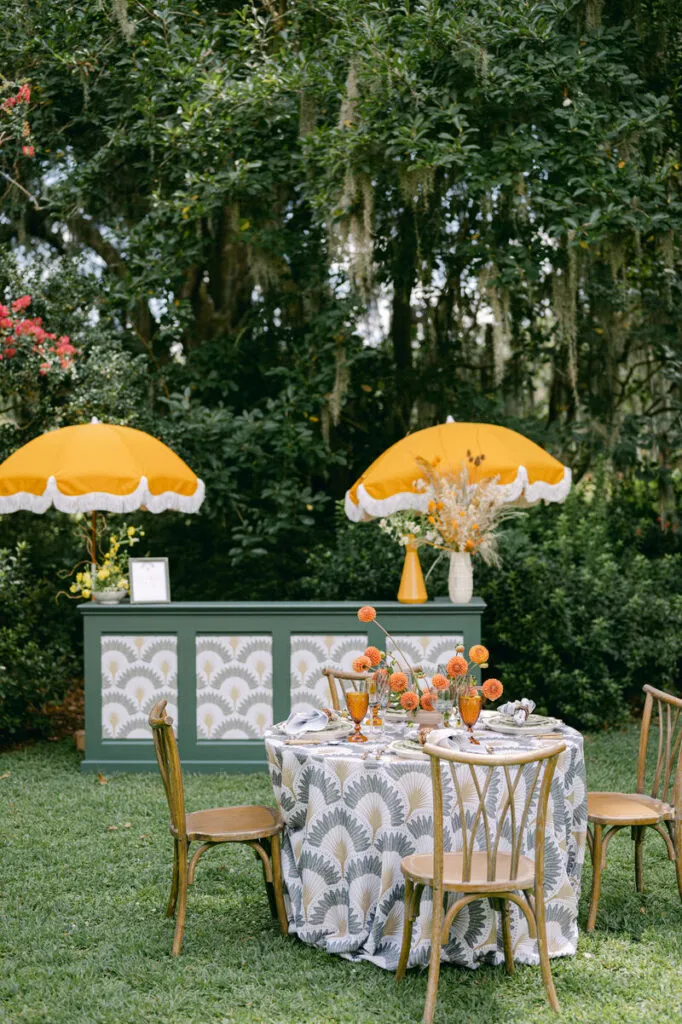
Custom sweetheart table linens can incorporate meaningful details from the wedding while remaining refined. The most successful personalization feels integrated into the textile rather than added as a separate label or sign.
A custom border, motif, pattern, or printed accent can reference the couple’s story, invitation suite, venue, or floral artwork. The design should still function as part of the complete tablescape.
Translate Wedding Artwork Into a Textile Detail
Artwork from the invitation suite can provide a natural starting point for a custom linen. A floral illustration, venue sketch, crest, abstract motif, or decorative border may be adapted into a runner or tablecloth detail.
The textile does not need to reproduce the stationery exactly. Simplifying the artwork or adjusting its scale can help it work more effectively on fabric.
This creates a thoughtful connection between the wedding’s paper elements and reception design.
Place Initials or a Crest With Restraint
Initials, monograms, and crests can add a personal touch when they are positioned carefully. Suitable locations may include a runner edge, tailored front panel, napkin, border, or subtle printed repeat.
Oversized names or repeated logos can make the linen feel promotional rather than personal. A smaller detail often creates greater impact because guests discover it naturally.
The placement should also be considered in relation to photography, seating, and floral design.
Create a Detail That Rewards a Closer Look
Not every custom element must be visible from the reception entrance. Some of the most memorable details appear in close-up photographs or reveal themselves when guests approach the table.
A fine border, small illustrated motif, or custom napkin can add intimacy without changing the overall composition from a distance.
This layered experience allows the sweetheart table to feel dramatic within the room and personal at close range.
Balance Visual Drama With Dining Comfort
The sweetheart table is both a design feature and a working dining space. The couple needs enough room for dinner, drinks, personal flowers, speeches, and other reception moments.
Decorative impact should not interfere with movement or visibility. A well-designed table feels abundant while remaining comfortable and functional.
Protect Space Around Both Place Settings
Begin with the space required for plates, flatware, glassware, napkins, menus, and any personal items. The table should not be arranged like a larger guest table with multiple place settings removed.
Decorative elements should respond to the actual scale of the table. Oversized arrangements can make two place settings feel compressed, even when they would appear balanced on a larger surface.
Maintaining open space around the couple also allows the linen to remain visible.
Move Abundance Beyond the Center
Florals and decorative details do not need to occupy the middle of the table. They can extend toward the edges, fall toward the floor, connect to a nearby backdrop, or continue onto adjacent structures.
This approach creates a sense of scale without sacrificing dining space. It can also direct attention toward the linen’s front-facing pattern, border, or texture.
Asymmetrical arrangements are especially useful for preserving visibility while maintaining a generous visual effect.
Keep Candles and Decorative Objects Proportional
Candles can add warmth and depth, but their height and placement should preserve the couple’s sightlines. Tall elements positioned directly in front of the newlyweds may block faces during speeches and photographs.
Use varied heights with restraint and keep larger pieces toward the outer sections of the table. Every object should contribute to the composition rather than simply occupy available space.
Design for Wide Views and Close-Up Photographs
The sweetheart table appears in full-room photographs, seated portraits, speech images, detail shots, and guest photographs taken from different positions. A design that works only from one distance may lose its effect elsewhere.
Planning for several views helps the linen remain visible and the couple remain clearly framed.
Review the Table as Part of the Full Room
From the reception entrance or main guest area, determine whether the sweetheart table registers as a focal point. The linen should provide enough distinction to separate the table from its surroundings.
This distinction may come from pattern, color, texture, scale, lighting, or backdrop placement. It does not require the table to be brighter or more decorative than every other area.
The table should feel important while remaining part of the complete reception.
Examine the Design at Seated Eye Level
A table can appear balanced from above but feel crowded when the couple is seated. Review the height of florals, candles, signage, and place settings from chair level.
Check whether the linen pattern remains visible and whether the chairs, backdrop, and tabletop frame both people evenly.
This perspective is particularly important for photographs taken during dinner and speeches.
Consider How Lighting Changes the Textile
Lighting can alter the appearance of color, texture, and sheen. Directional lighting may create deeper shadows within velvet or dimensional fabric, while candlelight can emphasize reflective or satin-finish details.
Strong uplighting may change the apparent color of a pale linen. Pattern contrast can also become softer or more pronounced depending on the room’s lighting.
Reviewing textile samples under conditions similar to the reception can help avoid unexpected results.
Photograph a Sample Composition
A small mockup can reveal issues that may not be obvious when each element is reviewed separately. Place the proposed linen with a chair, tableware, floral sample, candle, and backdrop reference, then photograph the arrangement from several angles.
The image can show whether patterns compete, colors shift under lighting, or decorative elements block important details.
A mockup does not need to reproduce the full table. Its purpose is to test relationships before the final installation.
Avoid Design Choices That Weaken the Focal Point
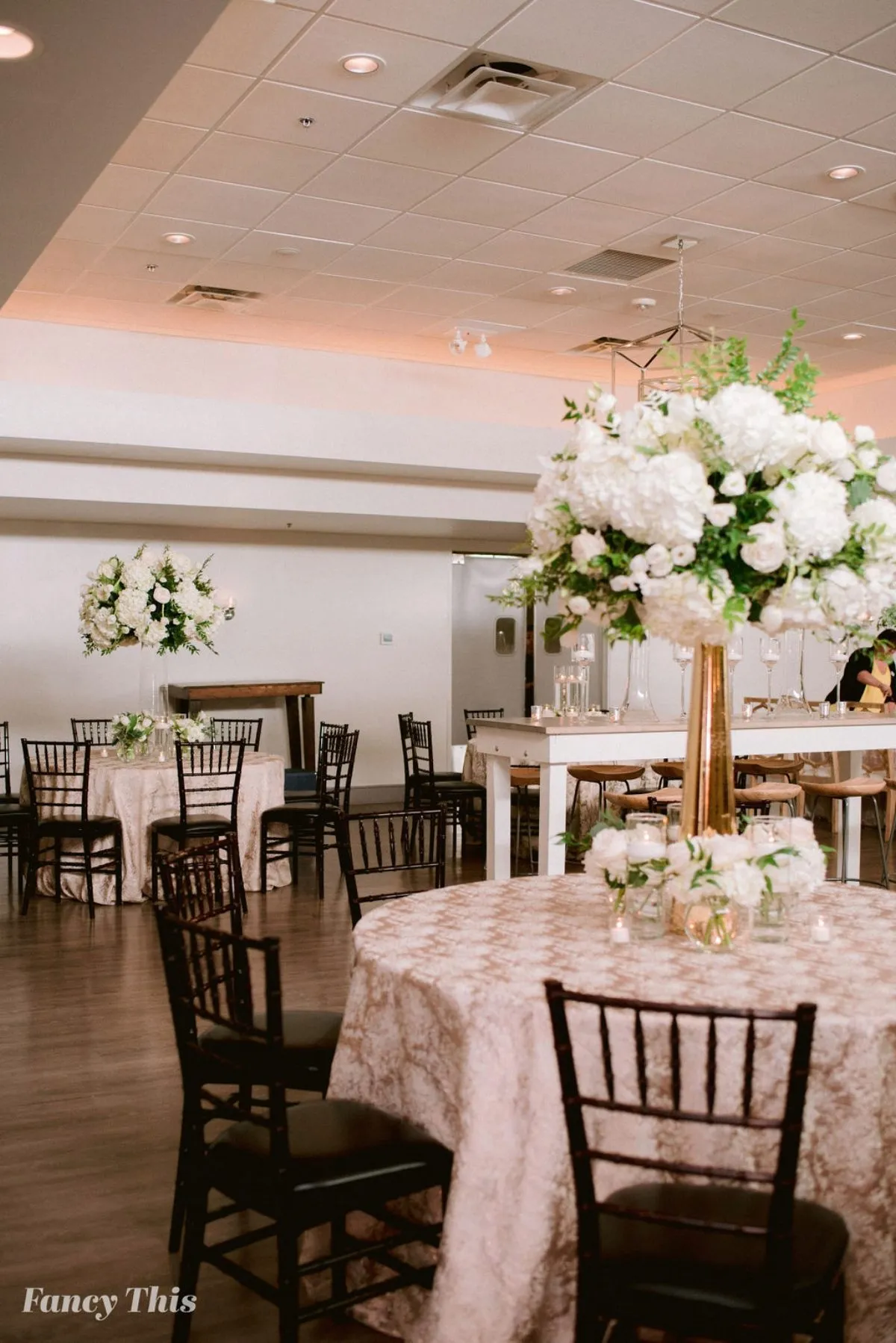
A distinctive sweetheart table depends on thoughtful editing. Problems often occur when several attractive ideas are combined without deciding which one should lead the design.
Removing an unnecessary element can strengthen the composition more effectively than adding another decorative detail.
Do Not Copy the Guest Tables Exactly
Using the same linen, flowers, chairs, and styling as the guest tables may cause the sweetheart table to disappear into the room.
Retain a clear connection, but change one significant element. This could be the linen pattern, textile format, chair style, backdrop, floral placement, or custom detail.
The distinction should be noticeable without making the table feel unrelated to the reception.
Do Not Combine Several Competing Patterns
A patterned linen may already contain several colors and visual movements. Adding equally prominent patterns through the chairs, backdrop, flooring, stationery, and tableware can make the table difficult to read.
Select one primary print and support it with solids, quieter textures, or restrained accents. Secondary patterns should appear at a different scale and remain visually subordinate.
Do Not Let the Backdrop Overpower the Couple
Large floral structures, drapery installations, scenic views, and architectural features can provide a compelling background. They should not make the couple appear small or visually disconnected from the table.
When the backdrop is highly detailed, simplify the tabletop and allow the linen to connect the couple to the larger installation.
The background should frame the scene rather than become its only subject.
Do Not Eliminate Every Area of Negative Space
Luxury does not require every surface to be filled. Open space allows guests to see the linen, tableware, flowers, and personalized details more clearly.
It also keeps the table functional and gives the composition room to breathe. A small number of well-selected elements can create greater impact than a crowded collection of decorative objects.
Bring the Sweetheart Table Concept Together With Curated Linen Collection
Curated Linen Collection offers patterned and solid table linens, runners, napkins, pillows, specialty overlays, velvets, linen, custom blends, and custom-printed designs for elevated events.
For a sweetheart table, these elements can be edited into one clear textile story. The process begins with a strong foundation and builds through carefully selected supporting details.
Begin With a Curated Pattern or Solid Foundation
The principal linen should establish the table’s color, texture, or pattern direction. An expressive print may become the focal point, while a refined solid can provide a sophisticated base for sculptural florals or a dramatic backdrop.
Starting with one clear textile choice makes it easier to evaluate chairs, tableware, stationery, and surrounding décor.
Supporting details should respond to the foundation rather than introduce unrelated ideas.
Develop a Custom Detail for a More Personal Result
A custom-printed element can give the sweetheart table a design specific to the couple and event. This may include a wedding motif, custom color combination, tailored border, venue-inspired illustration, or artwork adapted from the invitation suite.
Custom design is particularly effective when the table needs to stand apart while remaining connected to the wedding’s complete visual identity.
The result should feel integrated into the composition rather than added after the rest of the design has been completed.
Extend the Textile Story Beyond the Tablecloth
The main linen may be coordinated with napkins, a runner, specialty overlay, or chair pillow. These details can repeat a color, soften the transition between materials, or connect the sweetheart table to other reception areas.
Not every available textile needs to be used. Selecting only the pieces that strengthen the principal concept keeps the table refined and visually clear.
Frequently Asked Questions
Should sweetheart table linens match the guest-table linens?
They do not need to match exactly. The sweetheart table can repeat a color, texture, motif, or fabric detail from the guest tables while using a more distinctive linen treatment. This creates continuity and establishes the couple’s table as a focal point.
Is a full tablecloth or a runner better for a sweetheart table?
The best option depends on the table and design direction. A full tablecloth can create a complete statement and conceal a basic table surface. A runner may be more appropriate when the table is made from wood, stone, mirror, or another material worth displaying.
How can patterned sweetheart table linens be used without overwhelming the design?
Choose one dominant pattern and support it with quieter colors, restrained florals, and simple tableware. Leave enough visible space around the place settings so the pattern remains clear.
Can a custom linen be created specifically for one focal table?
Yes. A custom design can incorporate a wedding motif, border, color palette, monogram, artwork, or pattern developed specifically for the sweetheart table.
How should the linen coordinate with the chairs and backdrop?
The three elements should share at least one visual connection, such as color, texture, shape, or mood. They do not need to match. In many cases, contrast between the linen and chairs helps frame the couple more clearly.
What type of floral arrangement works best with a statement linen?
Low, asymmetrical, or edge-focused arrangements often allow more of the linen to remain visible. The floral design should complement the pattern and preserve clear sightlines for the couple.
How can the sweetheart table remain visible in a large reception space?
Use a distinctive linen, defined backdrop, focused lighting, contrasting chairs, or a carefully positioned floral installation. One strong design decision is usually more effective than several competing details.
Should the sweetheart table use the same napkins as the guest tables?
It can, but it is not required. A different napkin color, pattern, or custom detail can distinguish the couple’s setting while maintaining a connection to the rest of the reception.
Let the Couple’s Table Hold the Most Personal Design Moment
A memorable sweetheart table does not depend on excessive decoration. Its impact comes from a clear visual role, one dominant linen gesture, deliberate pattern placement, balanced layers, and enough open space to keep the couple at the center of the scene.
The linen should connect the table to the larger reception while giving it a distinct identity. Chairs, florals, tableware, lighting, and the backdrop should support that foundation rather than compete with it.
Through patterned linens, refined solids, specialty textile accents, and custom-printed details, Curated Linen Collection can help planners and couples create a sweetheart table that feels personal, cohesive, and visually significant from every important viewpoint.