A fall tablescape does not need to rely on orange linens, scattered leaves, miniature pumpkins, or heavily rustic details to communicate the season. Autumn can be expressed more subtly through warm undertones, layered materials, candlelight, botanical forms, and the movement of a carefully styled table runner.
A soft runner brings definition to the center of a table while allowing the surface beneath it to remain part of the design. Depending on its color, construction, and placement, it can soften architectural surroundings, introduce warmth to a modern venue, or create an intimate atmosphere across a long dining table.
The most effective treatment begins with a clear purpose. The runner may add movement, establish a tonal direction, connect floral groupings, or distinguish a feature table. Once that role is defined, the surrounding dinnerware, glassware, stationery, candles, and botanical elements can support the textile without concealing it.
Begin With the Surface the Runner Will Reveal

A table runner frames the surface beneath it rather than replacing it. The table material or base linen therefore contributes directly to the finished composition.
Before choosing a runner, consider what the exposed surface already brings to the design. It may provide warmth, visual quiet, architectural structure, reflective contrast, or a natural material reference. The runner should respond to those qualities instead of covering them without a clear design reason.
Let Wood Provide Natural Warmth
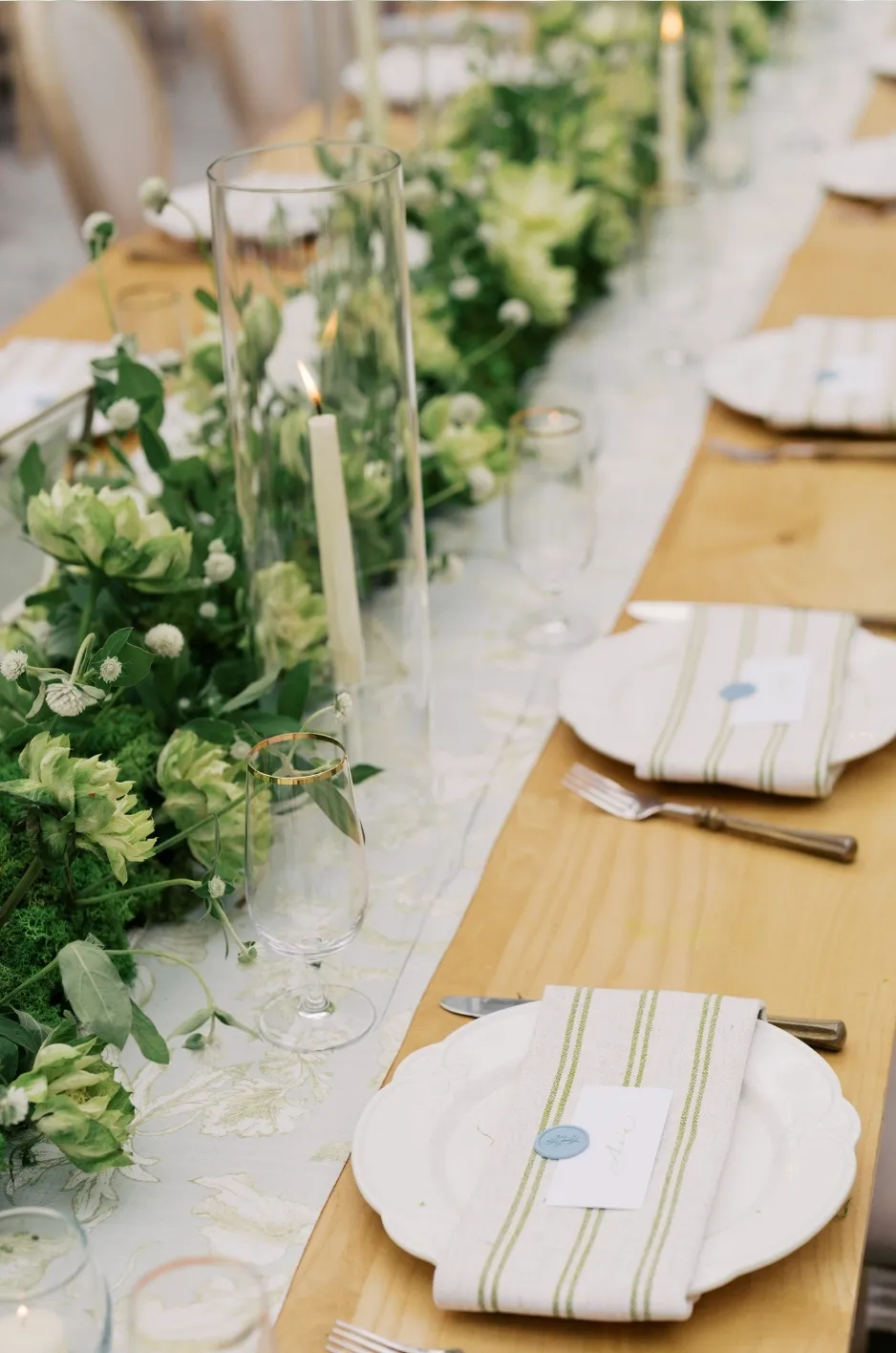
Wood tables already carry tonal variation, visible grain, and material depth. A soft runner can temper the table’s structure while allowing those natural characteristics to remain visible.
Rather than creating a heavily rustic setting, pair the wood with a refined textile in a muted neutral, botanical tone, or deeper seasonal color. The contrast between the solid table and fluid fabric can feel elegant and intentional.
Leave a generous portion of the tabletop visible on both sides of the runner. This gives the place settings a defined surface and prevents the textile from feeling like an incomplete tablecloth.
Soften Stone or Highly Structured Surfaces
Stone, metal, acrylic, and other firm materials can create a crisp or architectural table presentation. A fluid runner introduces movement and helps prevent the setting from feeling severe.
The textile may be arranged in a relatively smooth line or with shallow, controlled folds. Its softness should contrast with the table without obscuring the material that gives the setting its character.
A warmer neutral or muted color can also reduce the visual coolness of stone and metal surfaces, creating a more welcoming fall atmosphere.
Add Movement Over a Solid Base Linen
Some event tables require full linen coverage because of their construction or the desired level of formality. In these settings, a runner can create a separate centerline over a solid tablecloth.
The two textiles should have distinct roles. The base linen may establish the room-wide color foundation, while the runner introduces movement or a deeper tonal accent.
Avoid combining several dominant textures or patterns within this treatment. A quiet base allows the runner’s drape and color to remain visible after the table is fully styled.
Avoid Covering a Surface Without a Design Reason
A runner should contribute something the existing table surface does not already provide. It may introduce softness, guide the centerline, connect multiple arrangements, or add a controlled seasonal tone.
When the table already contains strong pattern, texture, and color, another textile layer may not improve the composition. Adding a runner simply because it is expected can make the table feel unnecessarily busy.
A clear purpose will determine whether the additional fabric strengthens the design or merely occupies space.
Decide How Much Movement the Table Needs
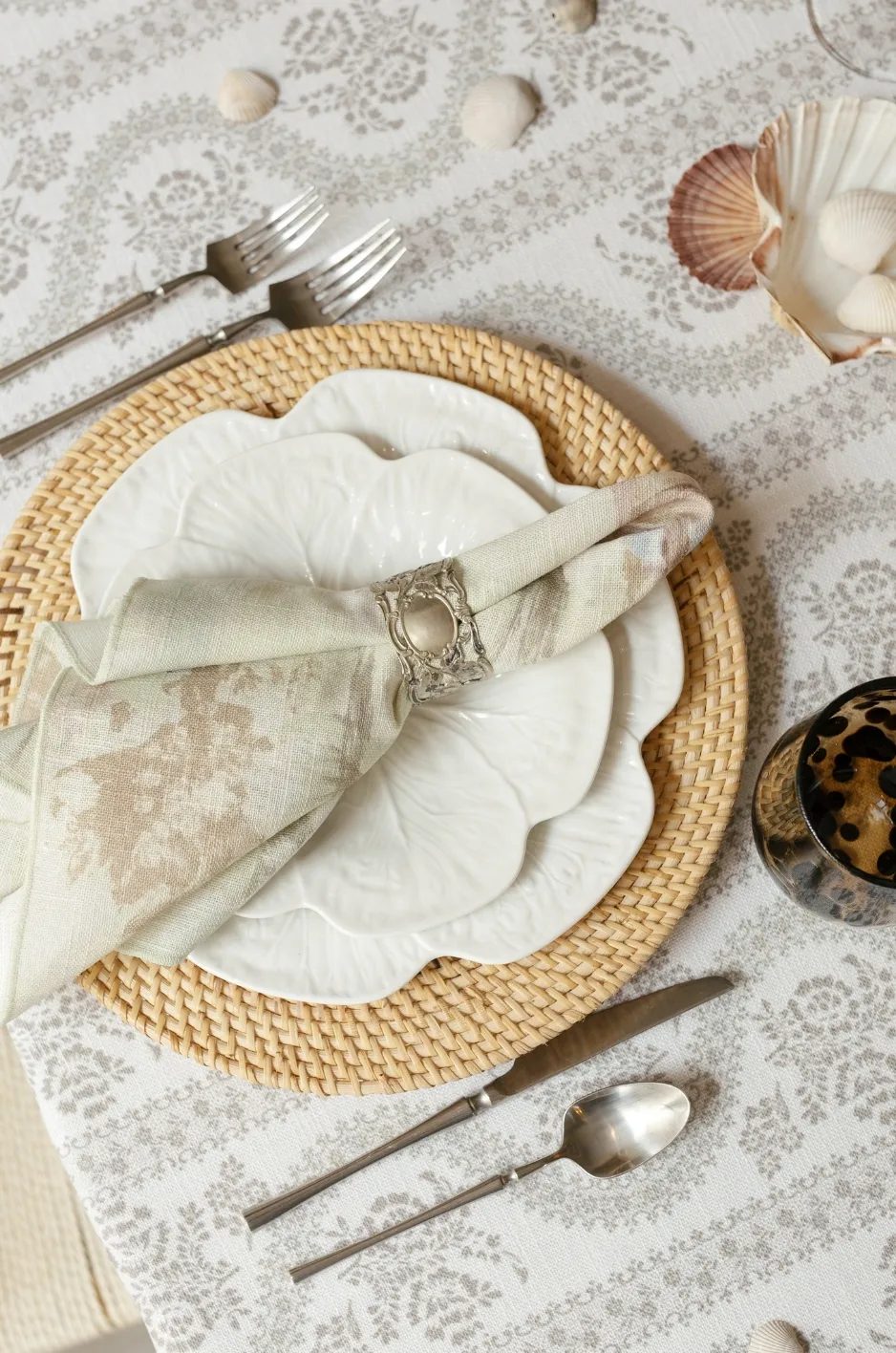
Soft runners can be styled in several ways, ranging from a smooth, tailored line to a series of gentle folds. The right amount of movement depends on the event’s level of formality, the table length, the venue, and the scale of the surrounding décor.
The fabric should appear deliberately positioned. Fluidity can create softness, but uncontrolled bunching may make an otherwise polished table look unfinished.
Use a Controlled Line for a Tailored Setting
A relatively smooth runner produces a clean centerline and supports a more formal composition. This approach works well with defined dinnerware, architectural floral arrangements, structured stationery, and highly finished interiors.
The runner may include slight movement, but its edges and overall direction should remain clear. Repeated guest tables benefit from this consistency because the collective effect creates visual rhythm across the room.
A controlled line can also keep candles, vessels, and serving pieces stable.
Introduce Gentle Folds for a Softer Composition
Shallow folds add dimension and create small areas of shadow along the center of the table. The movement should be distributed evenly rather than concentrated in large piles of fabric.
Keep the folds low enough to support floral vessels, candles, and other decorative elements. High or irregular gathers can destabilize the centerline and conceal much of the textile.
This softer treatment can balance structured chairs, geometric place settings, or formal architecture without making the complete design feel casual.
Allow a Restrained Drop at the Table Ends
A runner extending beyond the table can reinforce its fluid character. The drop should feel proportional to the table and consistent with the rest of the arrangement.
Avoid excessive fabric pooling on the floor. Large pools may interrupt guest movement, create problems during service, and shift the design toward a more theatrical appearance than intended.
A restrained drop provides enough movement to finish the table while preserving a clean silhouette.
Avoid Random Bunching
Natural-looking movement still requires control. Uneven fabric piles, twisting edges, and abrupt changes in direction can make the runner appear casually placed rather than intentionally styled.
Review the textile from both sides of the table and from the room’s main viewing angles. Adjust the folds so they support the floral and candle arrangement instead of forming unrelated shapes around them.
Softness should come from measured movement, not disorder.
Create Autumn Warmth Without Defaulting to Orange
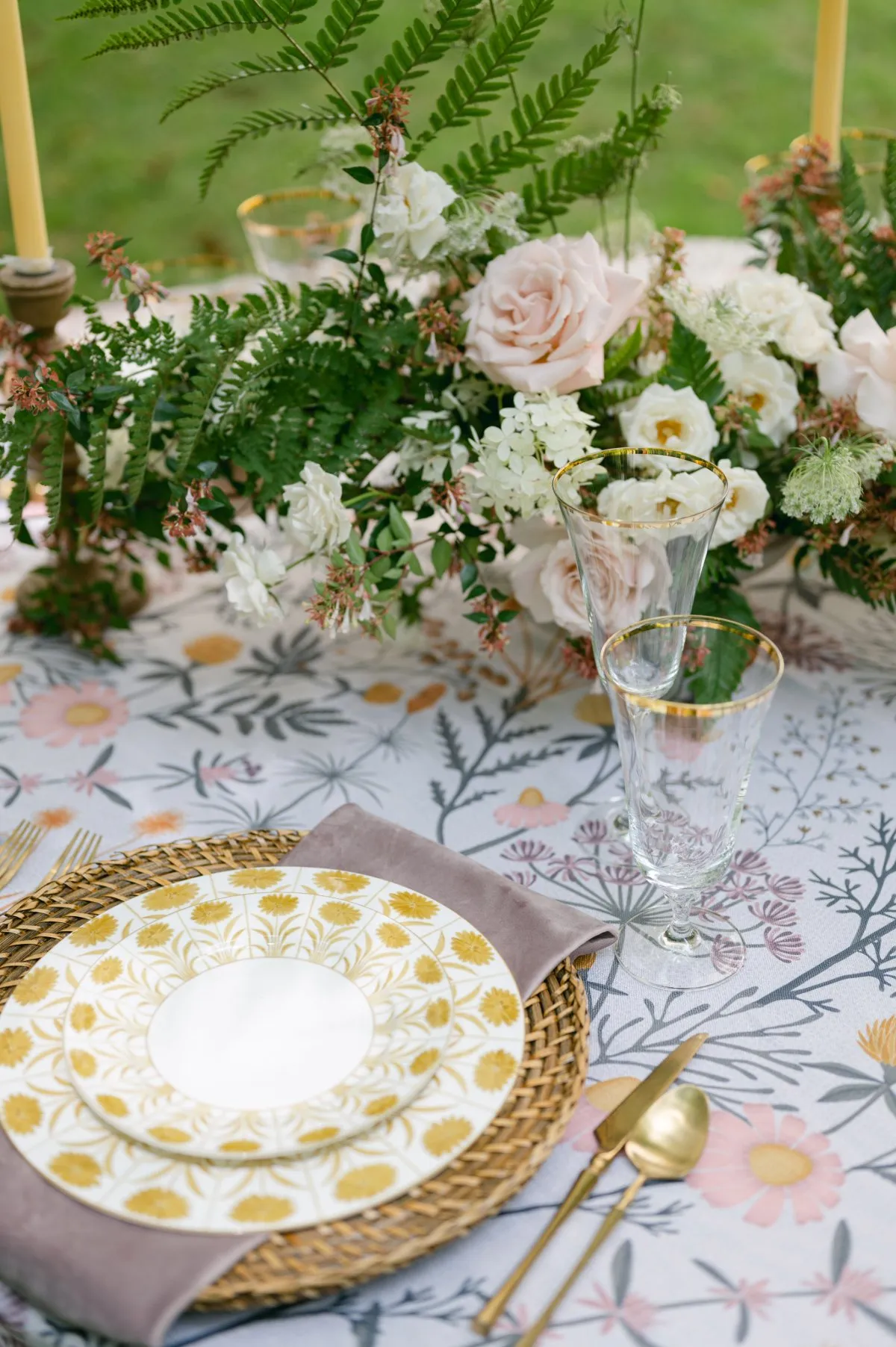
Seasonal color can be communicated through undertone, depth, and material contrast. A fall table does not need to use a predictable combination of orange, red, brown, and gold.
Warm neutrals, muted botanical colors, mineral tones, and deeper accents can create an autumn atmosphere while remaining responsive to the venue and the wider event design.
Build From Warm Neutrals
Oat, sand, mushroom, taupe, clay, warm ivory, and softened beige can establish a quiet seasonal foundation. These colors feel warmer than bright white without defining the table through one obvious autumn shade.
A neutral runner also allows floral color, candlelight, glassware, and tableware to carry more of the visual emphasis.
To prevent a neutral composition from feeling flat, vary the materials. A softly woven runner, ceramic dinnerware, clear glassware, and defined paper details can create depth within a restrained palette.
Consider Muted Botanical Tones
Olive, moss, lichen, muted sage, and softened blue-green shades refer to the landscape without creating a literal woodland theme.
These colors work particularly well with warm wood, antique metal, stone, cream ceramics, and flowers in burgundy, ivory, plum, or faded rose.
Botanical tones can also connect indoor and outdoor settings, making them useful for garden venues, tented receptions, and properties surrounded by mature landscapes.
Use Deep Color as a Controlled Accent
Aubergine, oxblood, chocolate, deep teal, ink blue, and muted plum can introduce autumn depth without overwhelming the table.
A deep runner is most effective when the surrounding materials are quieter. Pale dinnerware, clear glassware, understated stationery, and controlled floral placement allow the textile to carry the strongest color.
The deeper tone can also define a feature table while guest tables use a softer version of the same palette.
Let the Venue Influence the Final Undertone
Colors change according to their surroundings. A warm beige runner may appear golden in a wood-lined venue, while the same textile may look cooler in a modern gallery or under blue-toned lighting.
Historic ballrooms, garden estates, clear-top tents, modern galleries, and private residences each provide a different color context. Flooring, walls, drapery, natural light, and architectural finishes should inform the runner selection.
Choosing the color in response to the space produces a more integrated result than following a general seasonal palette.
Use the Runner to Establish the Table’s Visual Tempo
A runner guides the eye along the table. Its movement, visibility, and relationship with repeated place settings influence the visual tempo of the complete tablescape.
Rather than functioning as a passive strip beneath the centerpiece, it can connect floral groupings, create pauses, and establish a clear distinction between guest tables and feature surfaces.
Create Continuity Along a Long Table
On an estate or banquet table, the runner can connect multiple place settings and decorative groupings across a long surface.
Allow sections of the textile to remain visible between florals, candles, and serving elements. When the entire runner is covered, its ability to create continuity is lost.
The fabric does not need to follow a perfectly straight line, but its direction should remain clear from one end of the table to the other.
Break the Centerline Into Measured Pauses
A continuous row of florals, candles, and decorative objects can make the center of the table feel dense. Open sections of runner create visual pauses and give each grouping greater definition.
These intervals also reveal the runner’s texture, color, and folds. They allow the eye to move gradually through the table instead of encountering one uninterrupted decorative mass.
The pauses should feel balanced without becoming mechanically identical.
Increase Emphasis at a Feature Table
A head table, cake table, welcome table, or presentation surface may support a more expressive runner treatment.
The distinction could come from a deeper color, more visible drape, custom border, printed motif, or additional fabric movement. The treatment should strengthen an existing design idea rather than introduce an unrelated direction.
This creates hierarchy while keeping the feature table connected to the rest of the event.
Reduce Movement Across Repeated Guest Tables
When the same runner appears across many guest tables, a more controlled treatment often creates a stronger collective effect.
Excessive folds on every table can make the room feel visually restless. A quieter arrangement allows the repetition of color and textile to establish rhythm without making each table compete for attention.
Greater movement can then be reserved for selected focal surfaces.
Balance Soft Fabric With More Defined Materials
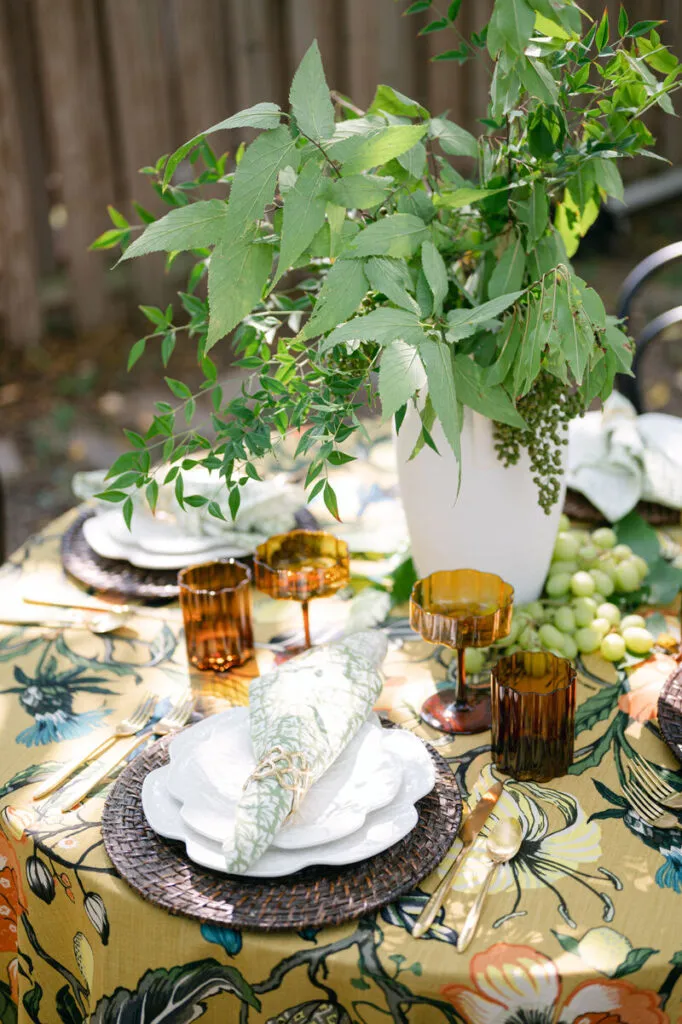
A fluid runner becomes more effective when it is balanced by materials with clearer shape and structure. Dinnerware, glassware, metal finishes, floral vessels, and stationery can give the textile enough definition to feel deliberate.
The surrounding materials should support the runner rather than cover its movement or introduce several competing visual directions.
Ground the Fabric With Defined Dinnerware
Chargers and plates with clean profiles can create useful structure against a softly arranged runner.
The dinnerware may be smooth, subtly textured, or lightly patterned, but it should not obscure so much of the fabric that the runner becomes difficult to see.
A controlled contrast between fluid textile and defined place setting creates balance without requiring additional decorative layers.
Use Metal Finishes With Restraint
Antique brass, brushed gold, darkened metal, and copper-toned details can introduce warmth. They work well as candleholders, flatware, small vessels, or charger accents.
Limit the number of metallic finishes within one table. Combining several reflective materials can shift the composition away from the runner and create an overly decorative seasonal effect.
One selected finish repeated with restraint will usually create greater cohesion.
Let Glassware Carry a Secondary Color
Colored or lightly tinted glassware can repeat a tone from the runner, flowers, venue, or stationery.
This provides another layer of color without requiring additional fabric or themed accessories. Amber, smoke, muted green, soft blue, and plum-toned glass can support a fall palette while remaining appropriate beyond one season.
The glassware should complement the runner rather than match it so closely that the setting loses contrast.
Choose Stationery That Does Not Compete With the Drape
Crisp menus and place cards can create a helpful contrast against soft textile movement.
The paper color, print, and edge treatment should remain readable and visually distinct. Highly patterned stationery placed directly over an expressive runner may make the table difficult to read.
When the runner carries the main texture or color, simpler paper details often create a more polished balance.
Design the Centerline Around the Runner
The runner and centerpiece should be developed as one composition. Flowers, candles, vessels, and functional elements need to interact with the textile without hiding it.
Planning the centerline around the runner ensures that its folds, color, and movement remain part of the finished table.
Place Florals Beside and Across the Fabric Selectively
Floral groupings can sit on the runner, cross its edge, or extend onto the exposed table surface. Varying the relationship prevents the centerline from appearing rigid.
Leave recognizable sections of the textile visible between arrangements. These openings help guests understand the runner’s role within the composition.
Large floral pieces should not cover every distinctive fold or color variation.
Use Candlelight to Reveal Surface and Movement
Candles can emphasize the runner’s folds, shadows, and tonal changes. Their light brings out details that may appear subtle during daylight.
Position candles at varied intervals rather than forming a continuous line of identical objects. This allows the illumination to move naturally across the fabric.
Safety, vessel stability, and the textile’s distance from open flames should remain part of the design planning.
Allow Low Elements to Follow the Textile’s Direction
Small vessels, fruit, seed forms, botanical pieces, or ceramic objects can follow the runner’s path through the center of the table.
The placement should create rhythm rather than appearing randomly scattered. Repeating a material or shape in controlled intervals helps organize smaller details.
Avoid using too many categories of decorative objects. One or two types are usually enough to support the runner.
Keep Service Areas Clear
The centerline must support the dining format. Shared dishes, water bottles, wine service, bread plates, and other functional pieces may require open space.
A beautiful runner treatment can quickly become impractical when every section is occupied by decorative items.
Coordinate the centerline with the catering and planning teams so the design remains intact throughout the meal.
Adjust the Runner Treatment to the Event Environment
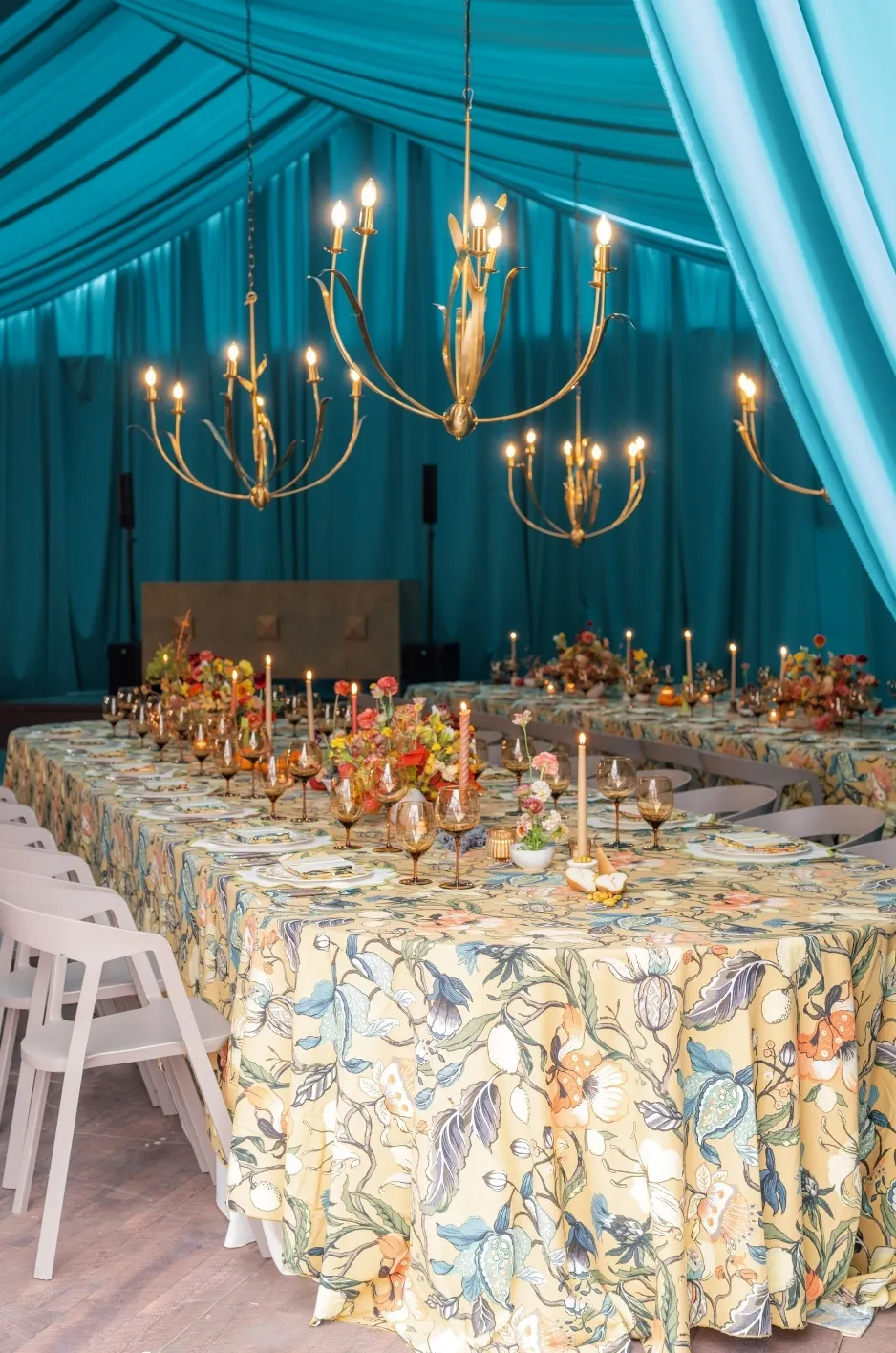
The same soft runner can feel formal, contemporary, romantic, or relaxed depending on the venue and surrounding design. Its drape, color, and degree of movement should respond to the room’s architecture, table material, lighting, and event scale.
Refine the Drape for Formal Interiors
Ballrooms, historic properties, and highly finished interiors often benefit from controlled folds and a defined centerline.
The runner can soften polished surfaces, ornate architecture, or formal tableware while preserving the room’s sense of order.
Avoid excessive pooling or uneven gathering that conflicts with the venue’s structured character.
Create Contrast in Modern Venues
Galleries, lofts, and clean-lined interiors provide a strong architectural background for fluid textiles.
A softly arranged runner can introduce warmth and movement without requiring several additional decorative layers. Keep the flowers, candles, and tableware edited so the contrast between fabric and space remains clear.
Muted color can also soften modern interiors without reducing their visual simplicity.
Respond to Outdoor Conditions
Tented, garden, and open-air settings introduce airflow, changing light, uneven surfaces, and other practical considerations.
The runner should be positioned securely enough to maintain its intended line. Decorative elements may help define its placement, but they should not be used as improvised weights that distort the fabric.
Review how the textile behaves in the actual environment before finalizing a highly fluid arrangement.
Let Intimate Tables Carry Greater Detail
Private dinners and smaller gatherings allow guests to appreciate textile details at close range.
A subtle border, custom motif, layered color, or more nuanced drape may be effective because the runner can be viewed closely.
Large receptions often require stronger color relationships and clearer placement so the treatment remains visible across the room.
Know When the Fall Table Is Becoming Too Literal
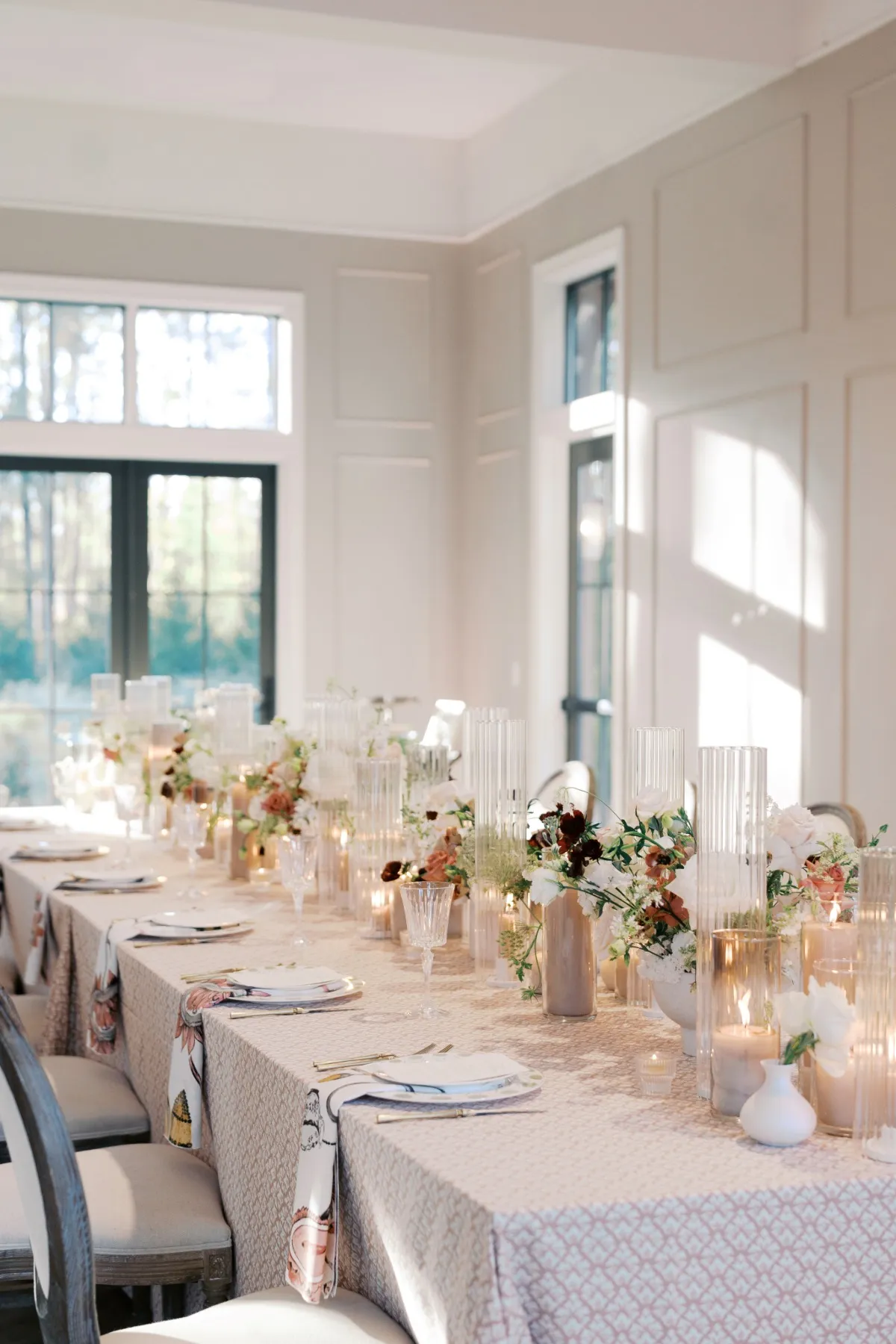
Seasonal styling loses refinement when every element communicates fall in the same obvious way. A table containing standard autumn colors, multiple natural objects, warm metals, dried foliage, and heavily gathered fabric can begin to feel themed rather than considered.
Editing the design allows the runner and a few selected seasonal references to make a stronger impression.
The Palette Relies Entirely on Standard Autumn Colors
When every linen, flower, candle, and decorative object is orange, red, brown, or gold, introduce a quieter neutral, botanical tone, or deeper contrasting color.
A broader palette creates greater dimension and helps individual details remain visible.
Natural Objects Outnumber Functional Table Elements
Pumpkins, fruit, branches, foliage, and decorative vessels should not overtake plates, glassware, menus, and service space.
Remove some natural elements when they begin to limit the table’s function or hide the runner.
The Runner Disappears Beneath the Centerpiece
A runner cannot influence the table if the entire textile is covered by flowers, candles, and accessories.
Divide the centerpiece into smaller groupings or remove unnecessary objects so the fabric becomes visible again.
The Drape Feels More Casual Than Intended
Large piles, uneven folds, and irregular edges can make the runner appear carelessly arranged.
Reduce the amount of gathering and create a clearer centerline when the table needs a more formal presentation.
Every Table Has the Same Visual Intensity
When guest tables, head tables, cake tables, and display tables all use equally dramatic runner treatments, the event loses hierarchy.
Use more controlled arrangements across repeated guest tables and reserve the strongest drape, color, or custom detail for high-visibility surfaces.
Develop the Fall Linen Direction With Curated Linen Collection
Curated Linen Collection offers table linens, runners, napkins, pillows, specialty overlays, patterned and solid textiles, and custom-printed details for refined events.
A focused linen direction begins with the table, venue, and desired atmosphere. The runner can then be selected according to the specific contribution it needs to make.
Start With the Table and Venue
Review the table material, surrounding architecture, lighting, flooring, and intended formality before selecting a runner.
These elements determine whether the textile should create warmth, soften a firm surface, provide contrast, or establish a seasonal color direction.
Define the Runner’s Principal Contribution
Decide whether the runner should add movement, tonal warmth, visual continuity, or greater emphasis at a feature table. Giving the textile one clear role makes it easier to evaluate color, drape, and supporting details.
Coordinate One Supporting Linen
A napkin, base tablecloth, pillow, or specialty accent can repeat one color or finish from the runner.
The supporting textile does not need to match exactly. A tonal relationship or related texture can create a more layered result. Avoid using identical fabric across every available surface, which can reduce the runner’s distinction.
Introduce Custom Detail Only When It Strengthens the Concept
A custom border, printed motif, or event-specific detail may be appropriate for a head table, welcome table, or another focal surface.
Customization should reinforce the event’s established palette and design language. It should not introduce a separate seasonal theme or another competing textile direction.
Frequently Asked Questions
Does a fall table runner need to use orange, red, or brown?
No. Warm neutrals, muted botanical shades, mineral colors, and deeper tones such as plum, teal, or chocolate can create a refined autumn atmosphere.
Can a soft runner be used on a formal wedding table?
Yes. A soft textile can suit a formal table when its folds are controlled, the centerline remains clear, and the surrounding tableware and décor provide sufficient structure.
Should a runner be placed over a tablecloth or directly on the table?
Either option can work. Use it directly on wood, stone, or another distinctive surface when that material should remain visible. Place it over a solid tablecloth when full coverage is needed or when the runner should create a separate centerline.
How can a runner look relaxed without appearing messy?
Use shallow, evenly distributed folds and maintain a consistent direction. Avoid excessive gathering, twisted edges, and large piles of fabric.
What flowers work with a subtle fall runner?
Choose flowers according to the event palette rather than a standard seasonal list. Textured blooms, sculptural foliage, branches, grasses, and seed forms can suggest autumn without relying on literal fall colors.
How much of the runner should remain visible beneath the centerpiece?
Enough should remain exposed between floral and candle groupings for its color, texture, and movement to contribute clearly to the table.
Can the same runner treatment be used on every guest table?
Yes, although repeated guest tables often benefit from a more controlled arrangement. A stronger drape or custom detail can be reserved for feature tables.
How should a fall runner coordinate with napkins?
The napkins may repeat a color from the runner, introduce a tonal variation, or provide contrasting texture. They do not need to use the same fabric.
Are pumpkins and dried leaves necessary for an autumn tablescape?
No. The season can be communicated through color depth, botanical form, material contrast, candlelight, and the movement of the runner.
Suggest the Season Through Texture, Movement, and Restraint
A refined fall tablescape does not depend on literal seasonal decoration. A soft table runner can communicate autumn through its undertone, movement, relationship with the table surface, and interaction with candlelight, flowers, glassware, ceramics, and architecture.
The runner should perform a defined role and remain visible within the finished centerline. When its folds are controlled and the surrounding details are edited carefully, the textile creates warmth without making the table feel themed.
Curated Linen Collection’s runners, coordinating table linens, napkins, specialty accents, and custom design options can support fall tablescapes that feel composed, atmospheric, and specific to the event.